Kalev and Kalevipoeg
Also known as: Kaleva, Kalevi, Kalev, Kalevipoeg, Kalevanpoika, Caleuanpoiat, Kalliweh
Basic account
Finnic giant ancestor and his stone-throwing sons, across Estonia, Finland and Karelia.
Account
In Estonian, the word kalev simply means giant. His wife's tears became the lakes.
The story
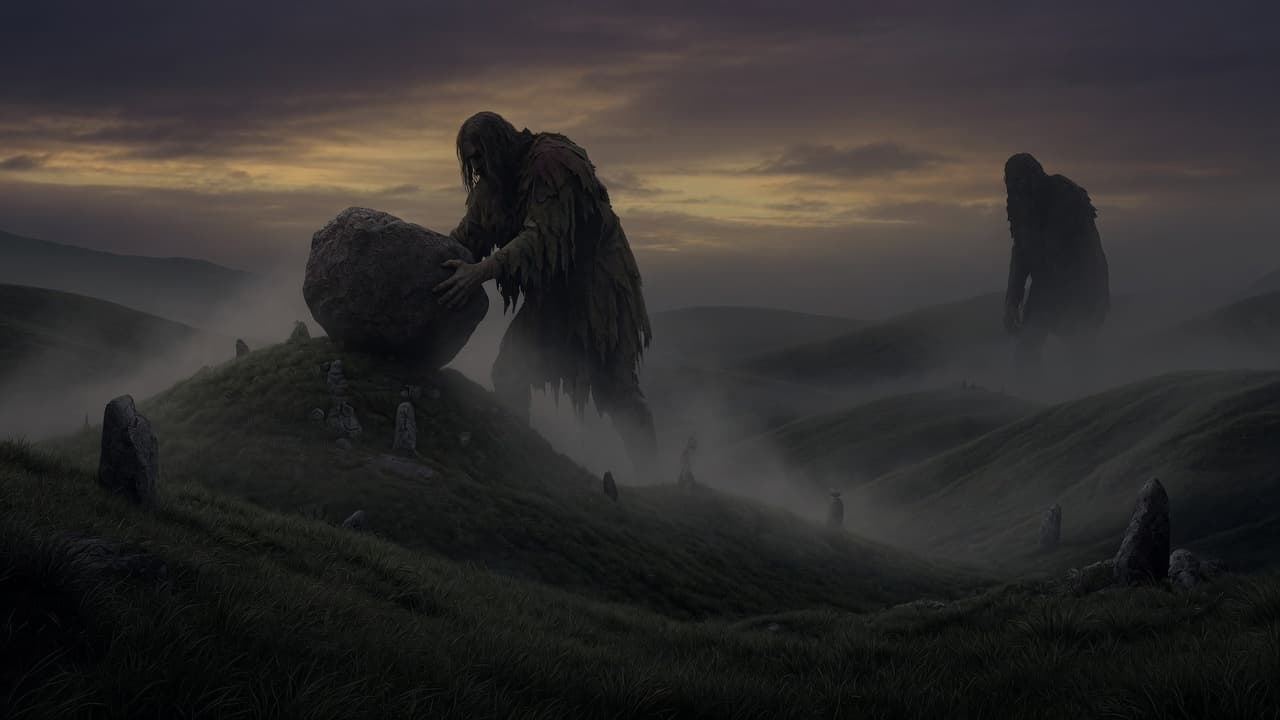
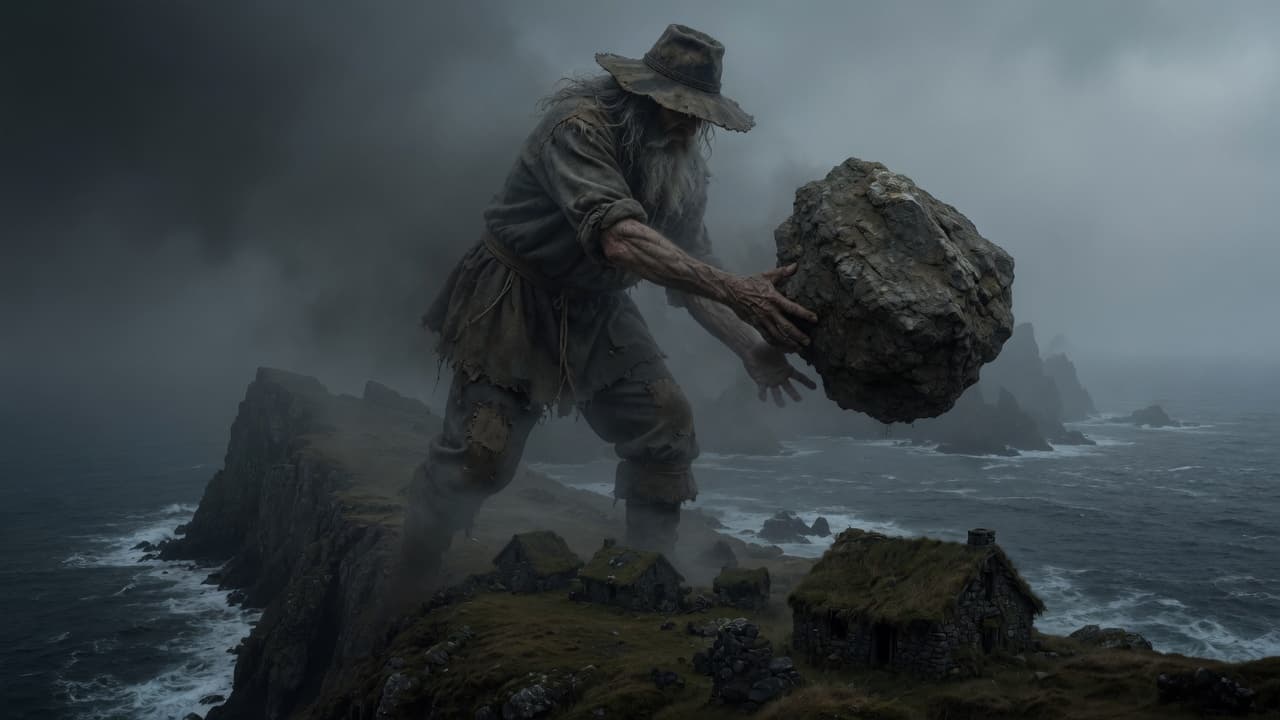
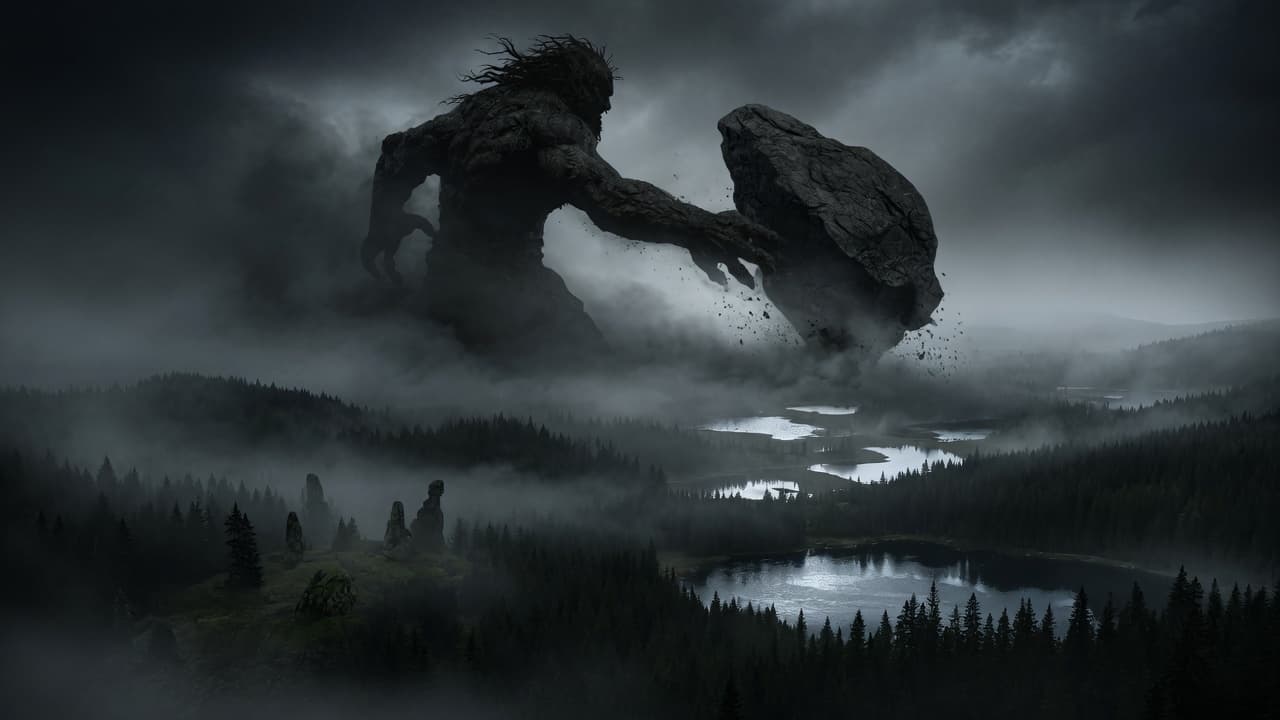
Kalev, Kaleva or Kalevi and his sons run through Estonian, Finnish and Karelian tradition as giants who lived in the land before people arrived. A stone-throwing giant is called Kalevanpoika in southwest Finland and Kalevipoeg in Estonia, the same figure across a language border.
The attestations are genuinely old. Mikael Agricola listed the Caleuanpojat, Kaleva's sons, among the giants of Finnic pagan belief in the sixteenth century. A seventeenth-century chronicle names an Estonian giant Kalliweh. The Old English poem *Widsith* mentions a Finnic ruler called Caelic, which some read as the same name again.
Linda, Kalev's wife, wept for him, and her tears are the lakes of Estonia.
There is an object in the churchyard at Untamala in Laitila, over two and a half metres tall, known locally as the whetstone Kaleva's son used on his scythe. It is a medieval tombstone. That correction is not a debunking. It is the clearest small example of the process this catalogue keeps running into: a community finds something in the ground that does not fit the scale of the people around it, and gives it to a giant.
Where it comes from
Mikael Agricola's list of Finnic pagan deities, printed in 1551 in the verse preface to his Finnish Psalter, is the earliest secure attestation: the Caleuanpoiat stand there among the gods of Häme. Heinrich Stahl's Leyen Spiegel, printed at Tallinn in 1641, carries the Estonian form Kalliweh.
The Finnish material survives mainly as place-names and as legends attached to boulders and hills, concentrated in the south-west around Kalanti. Mikko Heikkilä set out the onomastic evidence in SKY Journal of Linguistics 25 (2012).
On the Estonian side, Friedrich Robert Faehlmann proposed an epic built from Kalevipoeg legends to the Learned Estonian Society in 1839. Kreutzwald's second version, 19,087 verses with a German translation, was issued serially by that Society between 1857 and 1861, with a shorter popular edition printed at Kuopio in 1862.
The oral legends were gathered in the nineteenth century by Jakob Hurt and Matthias Johann Eisen, and are held in the Estonian Folklore Archives in Tartu.
Motifs
The people who came before
Giants as an earlier race displaced by the present one. Often a way of accounting for ruins, large bones, or an older population.
Also carried by: Bestla (Norse), British Giants: The Lesser Traditions (British and Welsh), Croatian Giants: The Lesser Traditions (Croatian), Fangfeng (Chinese), Fomorians (Irish), Gogmagog (Celtic / British), Ispolini (Bulgarian), Jentilak (Basque), Kahui-Tipua (Māori), Katallani (Albanian), Koljo (Finnish), Milžinai (Lithuanian), Mouros (Galician, Asturian, Portuguese), Nawao (Māori), Nemri (Croatian), Nephilim (Biblical / Near Eastern), Og of Bashan (Biblical / Near Eastern), Quinametzin (Mesoamerican / Aztec), Si-Te-Cah (Paiute), The Giants of Santa Elena (Manta, recorded by Spanish chroniclers), The Gigantes (Greek), The Patagonian Giants (European accounts of the Tehuelche and Selk'nam), Tombe dei Giganti (Sardinian), Uriași (Romanian), Ymir (Norse)
Shaped the land while living
The giant made the country by working it: dropping stones, digging channels, dragging a heel. Distinct from the giant whose corpse becomes the world, and distinct again from the giant who is the hill.
Also carried by: Daidarabotchi (Japanese), Dragonja (Croatian)
Attached to a real place
The tradition is anchored to a site you can still walk to: a dolmen, a cave, a hill fort, a named rock. The story travels with the ground rather than with the teller.
Also carried by: Baqbaq-Devi (Georgian), Bendigeidfran (Welsh), British Giants: The Lesser Traditions (British and Welsh), Croatian Giants: The Lesser Traditions (Croatian), Daidarabotchi (Japanese), Dragonja (Croatian), Gargantua (French), Klek (Croatian), Koljo (Finnish), Mapinguari (Amazonian, Brazilian), Milžinai (Lithuanian), Nemri (Croatian), Suur Tõll (Estonian), The Giants of Santa Elena (Manta, recorded by Spanish chroniclers), Tombe dei Giganti (Sardinian), Tröll (Icelandic)
What is disputed
The Estonian national epic *Kalevipoeg* was compiled by Friedrich Reinhold Kreutzwald between 1857 and 1861, modelled on the Finnish *Kalevala*. It is built from genuine oral material, runic song gathered from singers, but the assembly, the shaping and much of the connective tissue are nineteenth century and were done with national awakening in mind.
It is folk material. It is not folklore.
The distinction is worth keeping.
Sources
- Mikael Agricola, 16th century
- Juha Ruohonen, "Giant, Devil or Death? The Finnish Koljo in Mythology, Toponyms, Folklore and Archaeology"
- Kivikoski, 1955, on the Untamala stone
- Friedrich Reinhold Kreutzwald, Kalevipoeg, 1857-1861, with the caveat above