Waligóra and Wyrwidąb
Also known as: Wyrwidąb i Waligóra, Wali-góra and Wyrwi-dąb, O Waligórze i Wyrwidębie
Basic account
Twin strongmen raised by a wolf and a bear: Polish dragon-slayers who ruled the kingdom they saved.
Account
Almost every giant in this catalogue is something to be survived. These two are the heroes.
The story
A hunter's wife went into the forest to pick berries and gave birth to twin boys there. She died at once. No woman came to nurse them, so a she-wolf fed one and a she-bear fed the other.
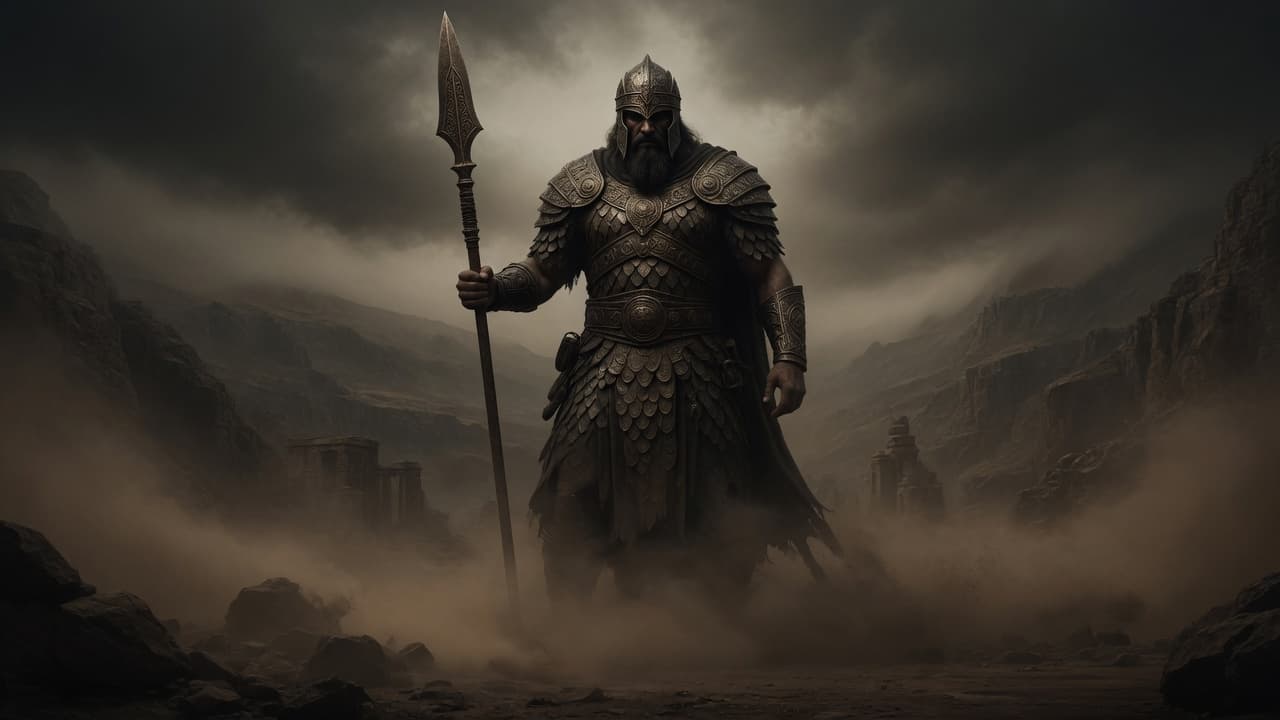
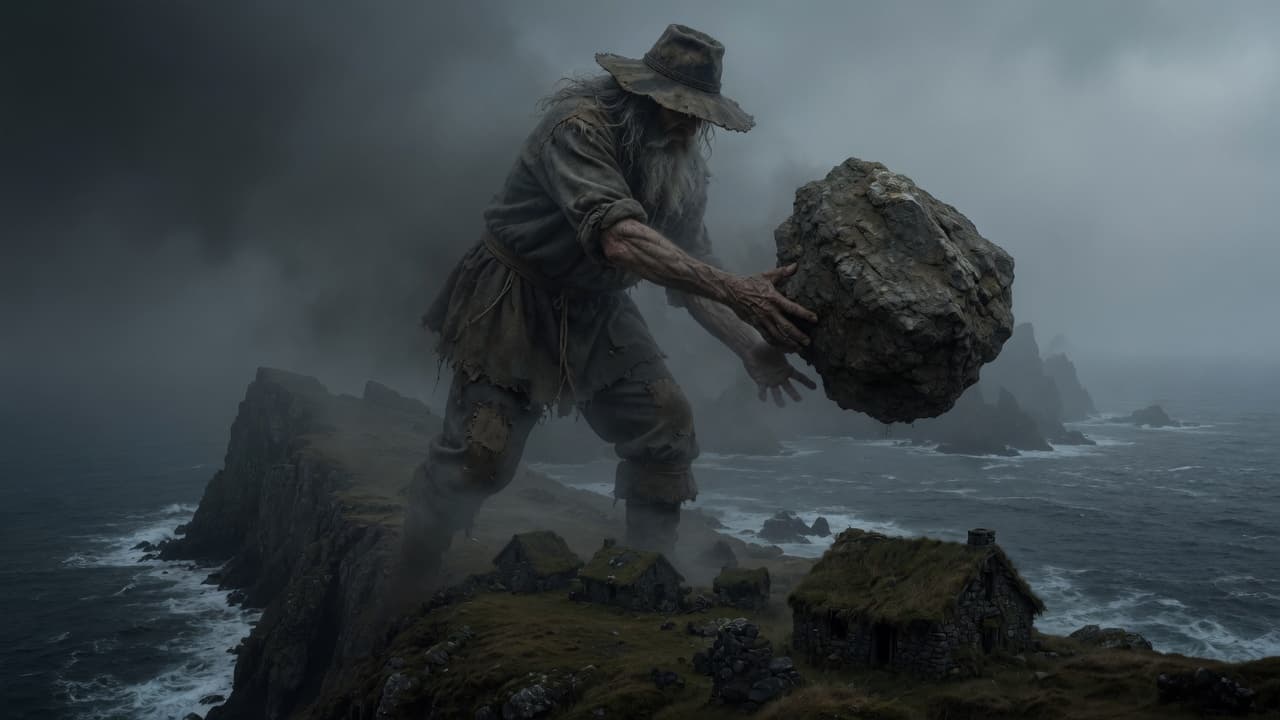
The wolf's foster-son was Waligóra, the mountain-feller. The bear's was Wyrwidąb, the oak-tearer. Their names are their strength and nothing else: one pushes mountains out of the way, the other pulls up the oldest oaks the way a man pulls ears of grain.
They went out together to see the world. A mountain blocked the road and Waligóra shouldered it half a mile aside. A great oak blocked the road and Wyrwidąb tore it up by the roots and threw it in the river. They met a small man with shoes that covered a mile at a step and two at a jump, and a carpet that flew, and he carried them to a kingdom where a dragon was eating people daily.
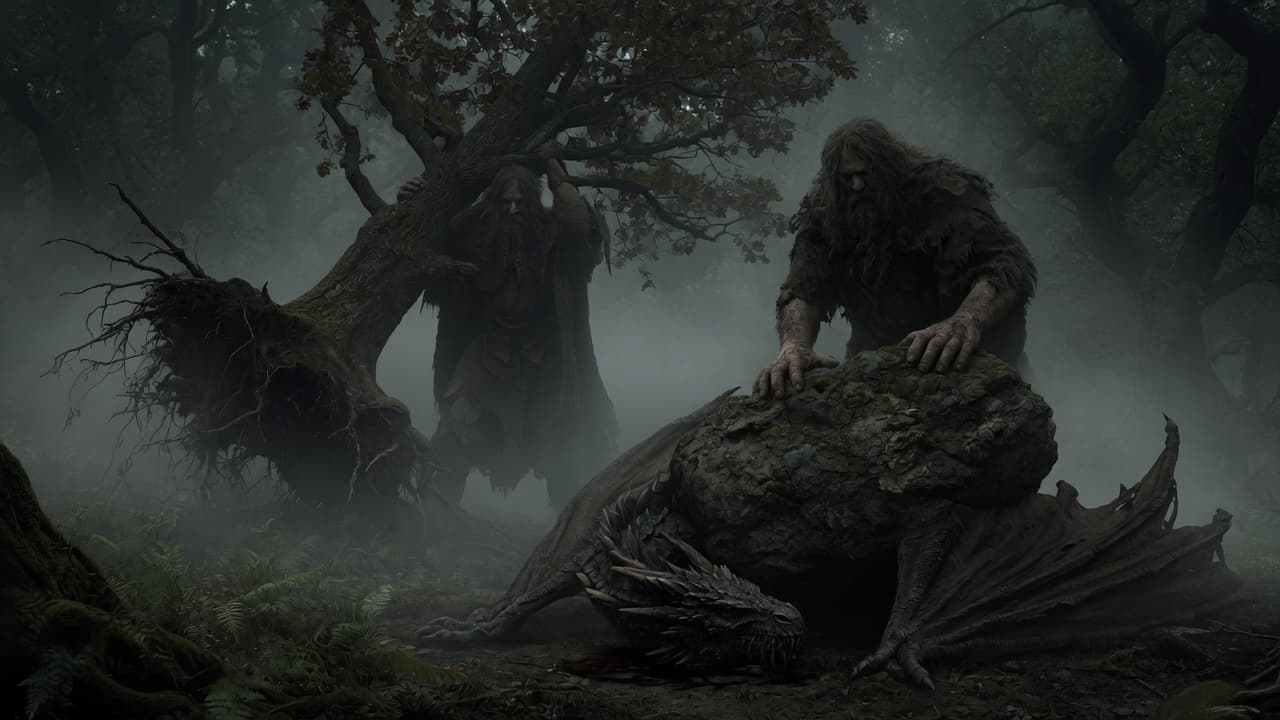
They killed it between them. Waligóra pinned the tail under a boulder so the thing could not move, and Wyrwidąb crushed the head with an oak. The king gave them his two daughters and princely titles, and when he died they divided the kingdom and ruled it together.
In Gliński's version the dragon is the Wawel dragon and the king holds Kraków, which ties the brothers into the city's foundation story. The Panieńskie Rocks there are named as traces of Wyrwidąb's work.
Where it comes from
The tale was first printed by Kazimierz Władysław Wójcicki (1807 to 1879) in *Klechdy, starożytne podania i powieści ludu polskiego i Rusi*, two volumes, Warsaw 1837. Wójcicki described gathering his material at the fireside, listening to spinners and household servants. The third edition of 1876, illustrated by Michał Elwiro Andriolli, carried the collection into wide circulation and into Czech, French, German and Russian translation.
Antoni Józef Gliński (1817 to 1866) printed his own version in *Bajarz polski, czyli zbiór baśni, powieści i gawęd ludowych*, four volumes, Wilno 1853, reissued repeatedly through the century (a corrected third edition appeared at Wilno in 1881).
Julian Krzyżanowski's Polish tale-type catalogue, *Polska bajka ludowa w układzie systematycznym*, carries this material as T 300B, *Smok i Waligóra*, inside the dragon-slayer group.
In Poland the tale has stayed in print as a children's and school text ever since.
Motifs
The giant as hero
The giant is on the side of the people: a protector, a champion, a founder. Where this occurs, the monstrous reading is usually the later layer, not the earlier one.
Also carried by: Bendigeidfran (Welsh), Milžinai (Lithuanian), Suur Tõll (Estonian)
Defeated by cunning
The giant loses to intelligence rather than strength: a trick, a false name, a riddle. Size is set up precisely so that it can fail.
Also carried by: Amazimu (Zulu / Nguni), Antaeus (Greek), Baqbaq-Devi (Georgian), British Giants: The Lesser Traditions (British and Welsh), Cormoran (Celtic / Cornish), Gogmagog (Celtic / British), Goliath of Gath (Biblical / Philistine), Polyphemus (Greek), Rübezahl (German / Silesian / Czech), Shuten Dōji (Japanese), Skrymir (Norse), Stallo (Sámi), Talos (Greek), The Gigantes (Greek), Thrym (Norse)
What is disputed
Twins abandoned in the wild, suckled by animals, who grow up to rule a kingdom, is the Romulus and Remus shape. Whether that is inheritance from a common source, borrowing, or two traditions independently reaching the same idea is not something the sources can settle.
Note also that this is a *baśń*, a folk tale, not a *podanie*, a local legend tied to a place. That distinction matters and is discussed under the Milžinai entry.
Sources
- Kazimierz Władysław Wójcicki, among the first to record it
- Antoni Józef Gliński
- classified as tale type ATU 300, The Dragon-Slayer