Gargantua
Also known as: Grand-Tua, Grand-Tuard, Guergintua, Jergantua, Gargountoun, Gargantoua
Basic account
Folk giant older than Rabelais: over four hundred French megaliths and rocks are named for him.
Account
Rabelais did not invent him. The name was already in use as a nickname in 1470, and by then the countryside was full of his furniture.
The story
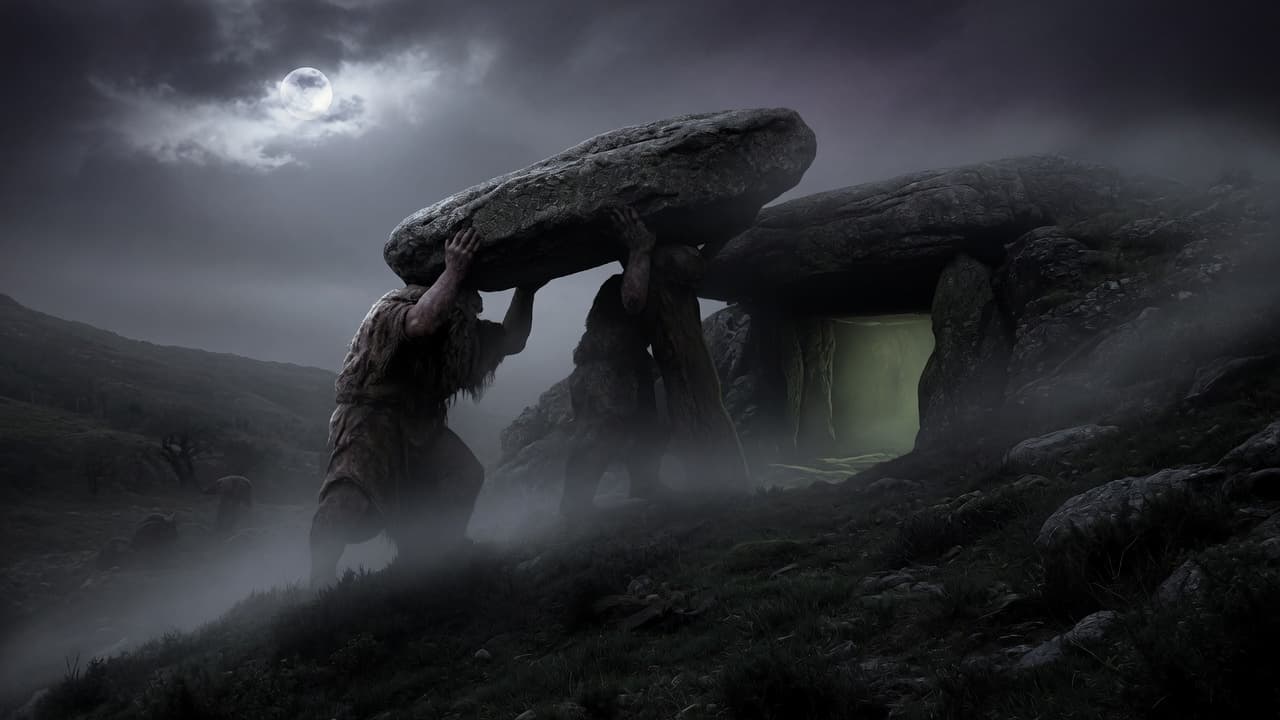
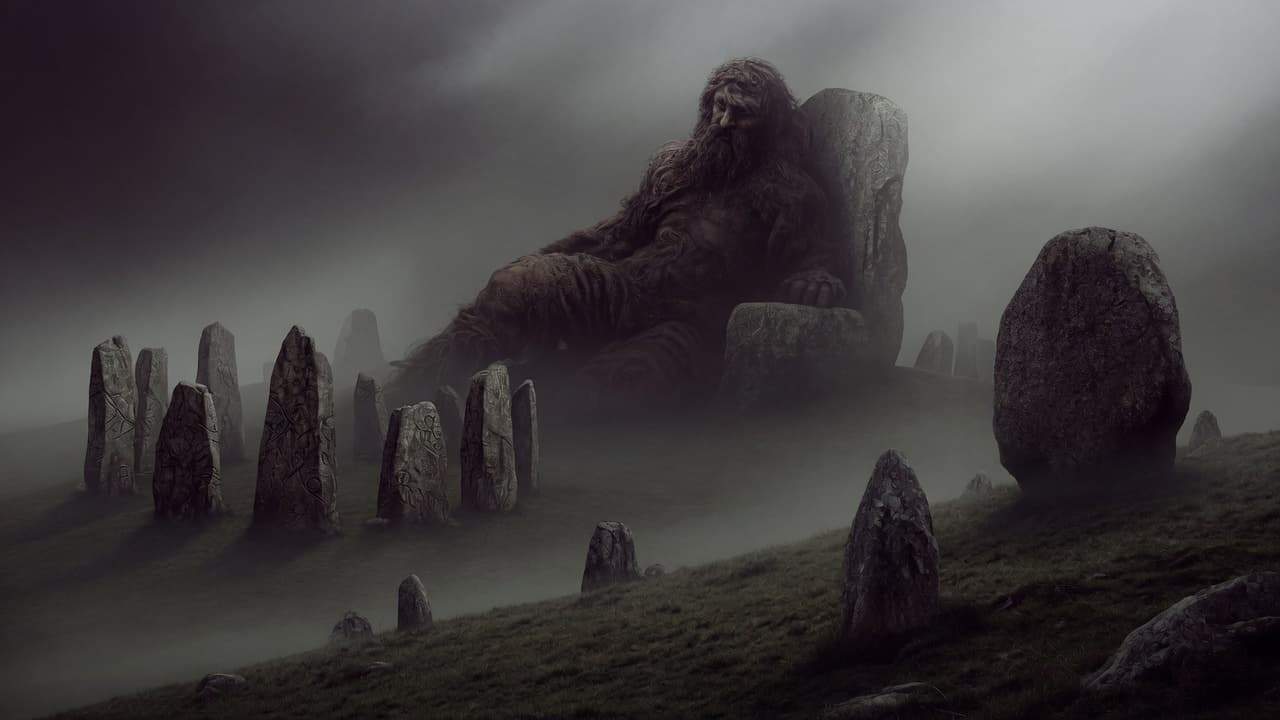
Across rural France, standing stones and strange rock formations carry his name and, more precisely, the names of his belongings. His quoit. His distaff. His skittle. His chair, his armchair, his bowl, his gravel. Sébillot, Dontenville and their successors catalogued more than four hundred such place-names, under regional variants including Grand-Tua, Grand-Tuard, Guergintua, Jergantua, Gargountoun and Gargantoua.
This is the megalith tradition at its largest recorded scale anywhere. Not a vanished race who raised the stones, but one named giant who left his things lying about.
The case that he predates literature was made by the palaeographer Félix Bourquelot in 1844 and settled by the Breton ethnologist Paul Sébillot, who in the 1880s sent a questionnaire to mythographers and local scholars across the country and published the returns in 1883. George Sand had already said it plainly: Gargantua is the work of the people, and Rabelais, like every great creator, took his material where he found it.
Then the Church took the landscape back. The places, the chasms, the rock chaoses and the standing stones called Gargantua's were rebaptised as the devil's, and the giant was set against Christian figures. The stones did not move. Only the owner's name changed.
He grew so large in the popular imagination that he absorbed the local giants around him, and anonymous or half-remembered figures across France ended up with his name attached. A few escaped: Roland in the Basque country, Hok Bras and Rannou in Lower Brittany.
Where it comes from
The literary Gargantua reaches print in 1532, in the anonymous chapbook *Les grandes et inestimables chroniques du grand et énorme géant Gargantua*, printed at Lyon, alongside Rabelais's own books of the 1530s. The folk figure is older, and it was recovered by nineteenth-century collectors rather than by literary scholarship.
Félix Bourquelot set out the case for a Gargantua preceding Rabelais in a notice of 1844, published in the Mémoires de la Société des antiquaires de France. Henri Gaidoz followed in 1868 with *Gargantua, essai de mythologie celtique*, a paper read to the Société de linguistique de Paris in the sessions of 6 and 20 June that year.
Paul Sébillot's *Gargantua dans les traditions populaires* (Maisonneuve, Paris, 1883) gathered the returns of his circulated questionnaire into the standard collection. Henri Dontenville, founder in 1950 of the Société de mythologie française, and Guy-Édouard Pillard, in *Le Vrai Gargantua* (Imago, 1987), carried the survey forward.
Motifs
The giant as builder
Walls, causeways, dolmens and bridges attributed to giants: usually structures whose real makers had been forgotten.
Also carried by: Budj Bim Giants (Australian Aboriginal (Gunditjmara related landscape)), Croatian Giants: The Lesser Traditions (Croatian), Dragonja (Croatian), Jentilak (Basque), Mouros (Galician, Asturian, Portuguese), Paul Bunyan (American tall-tale), Quinametzin (Mesoamerican / Aztec), Tombe dei Giganti (Sardinian), Xelhua (Mesoamerican)
Ended by Christianity
The giants do not lose a battle: they leave, die or turn to stone at the moment the new religion arrives. The tradition dates its own displacement.
Also carried by: Mouros (Galician, Asturian, Portuguese)
Attached to a real place
The tradition is anchored to a site you can still walk to: a dolmen, a cave, a hill fort, a named rock. The story travels with the ground rather than with the teller.
Also carried by: Baqbaq-Devi (Georgian), Bendigeidfran (Welsh), British Giants: The Lesser Traditions (British and Welsh), Croatian Giants: The Lesser Traditions (Croatian), Daidarabotchi (Japanese), Dragonja (Croatian), Kalev and Kalevipoeg (Estonian, Finnish, Karelian), Klek (Croatian), Koljo (Finnish), Mapinguari (Amazonian, Brazilian), Milžinai (Lithuanian), Nemri (Croatian), Suur Tõll (Estonian), The Giants of Santa Elena (Manta, recorded by Spanish chroniclers), Tombe dei Giganti (Sardinian), Tröll (Icelandic)
What is disputed
Sébillot read the name as meaning the devourer. Later scholarship prefers something closer to the fierce or the wild.
Some argue Gargantua is the residue of a Celtic god named Gargan, but there is no archaeological trace supporting that, and at least one popular etymology used to support it, reading the islet name Tombelaine as containing a Gaulish god's name, does not hold: the name derives from an older form built on *Tumba*.
Sources
- Paul Sébillot, Gargantua dans les traditions populaires, Maisonneuve, Paris, 1883
- Félix Bourquelot, 1844
- Henri Gaidoz
- Henri Dontenville
- Guy-Édouard Pillard, Le Vrai Gargantua: mythologie d'un géant, 1987
- Les grandes et inestimables chroniques du grand et énorme géant Gargantua, anonymous, 1532