Atlas
Basic account
Titan condemned to hold the sky upon his shoulders.
Account
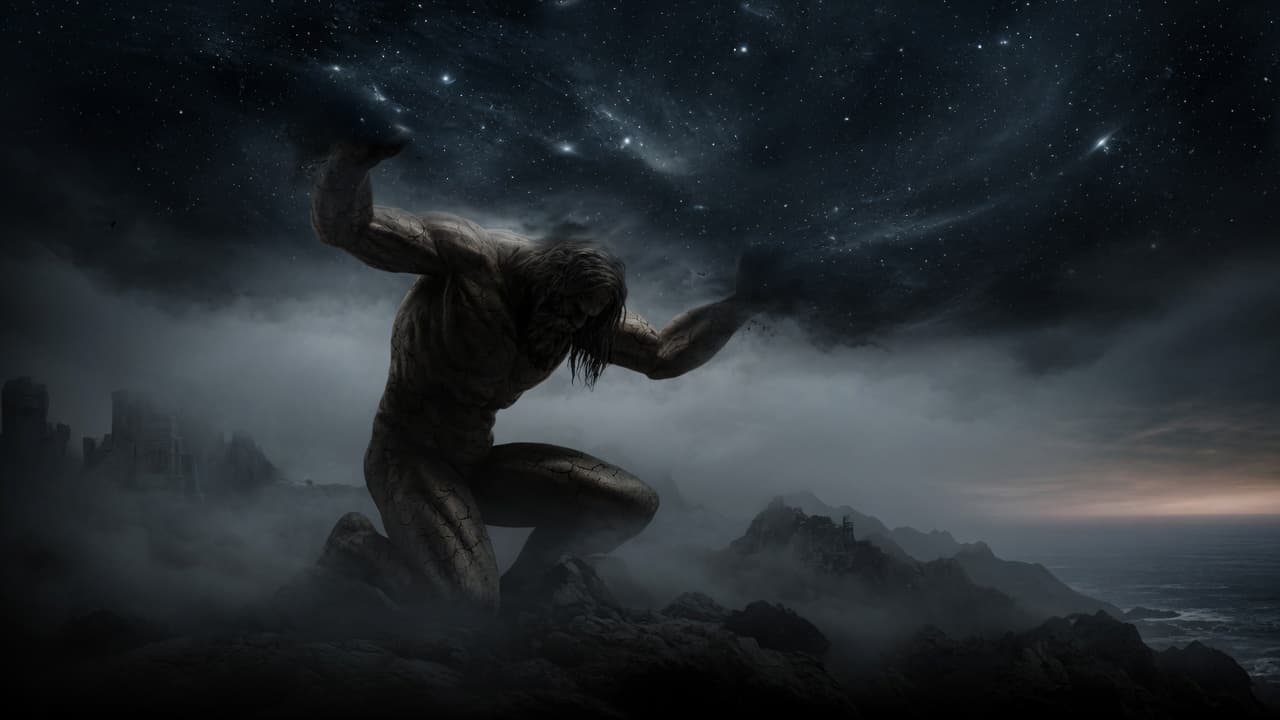
Atlas, a of the generation before the Olympians, stands at the western edge of the world holding the sky away from the earth. The punishment is the portrait: he is remembered almost entirely as a posture.
The story
The lost. That is the fact everything about Atlas follows from.
When Zeus and the Olympians broke the older gods, most of the defeated were thrown into Tartarus. Atlas was given something more specific. Hesiod places him at the world's western limit, holding up the wide sky with his head and tireless hands, and the word he uses carries the sense of unrelenting necessity: not a sentence with an end date, but a job that is now simply how the cosmos is arranged.
Later tellings soften the geometry. He becomes the bearer of a sphere rather than only the separator of sky from earth. The sphere is ancient: Apollodorus has Heracles take the celestial sphere from Atlas, and the Farnese Atlas (about 150 CE) shows a constellation-marked globe. What is post-classical is the terrestrial globe and the use of "atlas" for a book of maps, from Mercator's Atlas of 1595. The older image remains a man keeping sky and earth apart.
Two visitors interrupt him. Heracles, sent for the golden apples of the Hesperides that grow in Atlas's own country, offers to take the weight while Atlas fetches them. Atlas returns with the apples and no intention of resuming the load, and Heracles asks him to hold it briefly while he pads his shoulders: then walks away. The strongest figure in the story is beaten by the oldest trick in it.
Perseus arrives with the head of Medusa and receives no hospitality, so he uses it, and Atlas becomes the mountain range in north-west Africa that still carries the name. That version and the sky-holding version cannot both be true, and the tradition never tried to reconcile them.
Where it comes from
Hesiod's Theogony, composed around 700 BCE, is the earliest full account: Atlas as son of the Iapetus, stationed at the world's edge under harsh compulsion. The detail is brief and assumes an audience that already knows him.
Homer's Odyssey mentions him differently: Book 1 calls him the one who knows the depths of every sea and holds the pillars that keep earth and sky apart. Pillars, not shoulders. The image was still moving.
The apples episode is developed by later mythographers, most usefully Apollodorus in the Bibliotheca, a systematising handbook probably of the first or second century CE that survives as our most complete narrative source for much of this material. Ovid's Metamorphoses IV supplies the petrification by Perseus.
The Atlas Mountains and the Atlantic Ocean both take their names from him, which means the geography is repeating a story every time it is written down.
Motifs
Holding up the sky
A giant who carries or props the heavens, explaining why the sky stays where it is.
Also carried by: Gaoh (Iroquois / Haudenosaunee), Pangu (Chinese)
Punished without end
Bound, stretched, buried or fed upon forever. The giant becomes a fixed feature of the cosmos rather than a character in it.
War against the gods
Giants rise against the ruling powers and lose. The defeat is usually the point: it explains why the present order is the order.
Also carried by: Balor (Celtic / Irish), Goliath of Gath (Biblical / Philistine), Hiranyakashipu (Hindu), Hrungnir (Norse), Nephilim (Biblical / Near Eastern), Og of Bashan (Biblical / Near Eastern), Thrym (Norse), Xelhua (Mesoamerican), Alcyoneus (Greek), Enceladus (Greek), Polybotes (Greek), Porphyrion (Greek), Tityus (Greek)
What is disputed
Whether Atlas began as a Greek figure at all is an open question. The name has no secure Greek etymology, and proposals ranging from a pre-Greek substrate word to a North African or Near Eastern origin have all been argued without resolution.
The relationship between the sky-bearer and the mountain is unresolved in a different way. It is not clear whether the mountain was named after the myth, the myth grew out of a way of talking about the mountain, or the two traditions were independent and later joined. Ancient authors already disagreed.
Sky-bearing itself is not distinctively Greek (Egyptian, Vedic and other traditions arrange the heavens by similar means), but the resemblance is loose enough that it may show a common way of solving an obvious problem rather than any shared inheritance.
Sources
- Hesiod, Theogony 517-520 and 746-748 (c. 700 BCE)
- Homer, Odyssey I.52-54
- Apollodorus, Bibliotheca II.5.11 (the golden apples)
- Ovid, Metamorphoses IV.627-662 (petrification by Perseus)
Part of
Scholarly notes
Sources and scholarly notes come with the same membership.
Mark for My Journey
Private marks. They are not a collection score.
Marks stay on this device for this session. Sign in to keep your marks.
Frequently asked
- Did Atlas hold up the Earth?
- Not in the early sources. Hesiod places him at the world’s western limit, holding up the wide sky with his head and tireless hands. Homer’s Odyssey Book 1 has him hold the pillars that keep earth and sky apart: pillars, not shoulders. The celestial sphere is ancient (Apollodorus; the Farnese Atlas, about 150 CE). What is post-classical is the terrestrial globe.
- Was Atlas a giant or a Titan?
- The account names him a Titan of the generation before the Olympians, son of the Titan Iapetus. When Zeus and the Olympians broke the older gods, most of the defeated were thrown into Tartarus; Atlas was given a more specific punishment. Giant is not his class in the early sources.
- What is the difference between Homer’s Atlas and Hesiod’s?
- Hesiod’s Theogony (c. 700 BCE) has him holding the sky. Homer has pillars between earth and sky. The image was still moving.
- How did Atlas become a mountain?
- In Ovid’s Metamorphoses IV, Perseus arrives with the head of Medusa, receives no hospitality, and uses it; Atlas becomes the mountain range in north-west Africa that still carries his name. That version and the sky-holding version cannot both be true, and the tradition never tried to reconcile them.
- Why are books of maps called atlases?
- The use of atlas for a book of maps comes from Mercator’s Atlas of 1595. The Atlas Mountains and the Atlantic Ocean both take their names from him.
Related giants
 The GigantesGreek · Earth-born Greek race defeated by the Olympians: man-sized in the earliest art, ...
 EnceladusGreek · Giant buried beneath Sicily; his thrashing is said to cause earthquakes.
 PorphyrionGreek · King of the Gigantes who assailed Hera and fell to Zeus and Heracles.
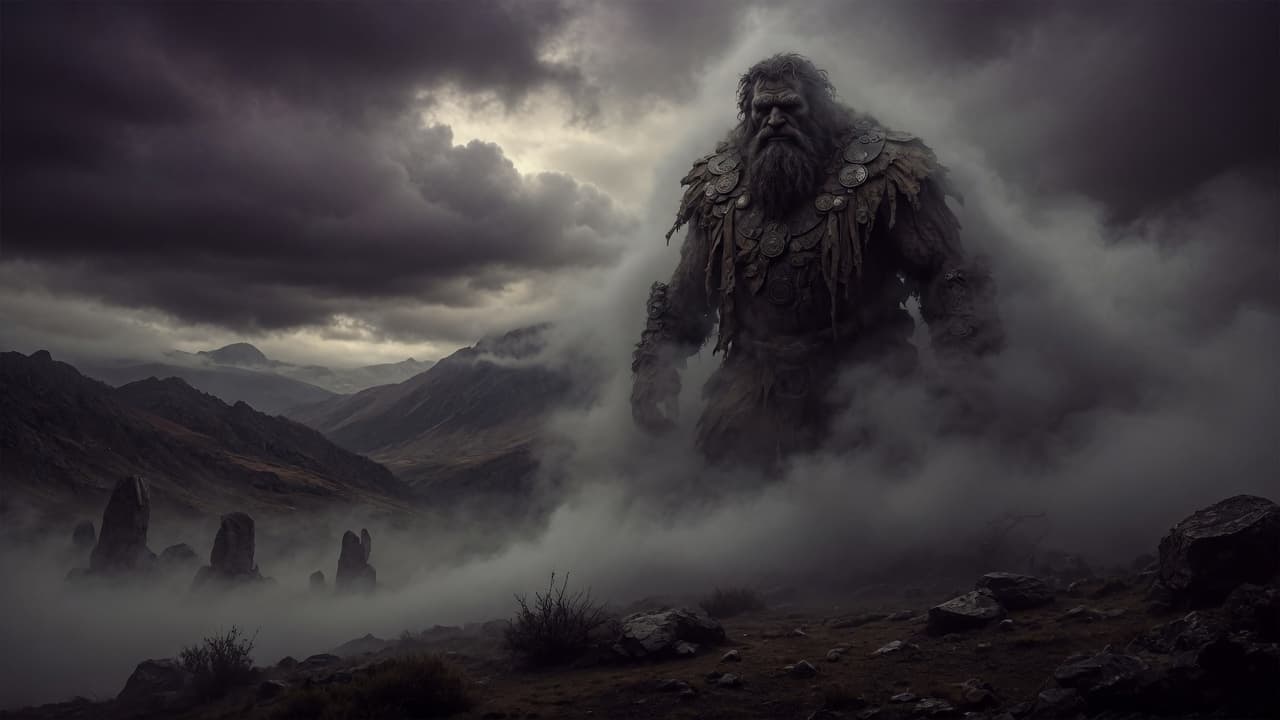 AlcyoneusGreek · Immortal on his native soil; slain only when dragged beyond its border.
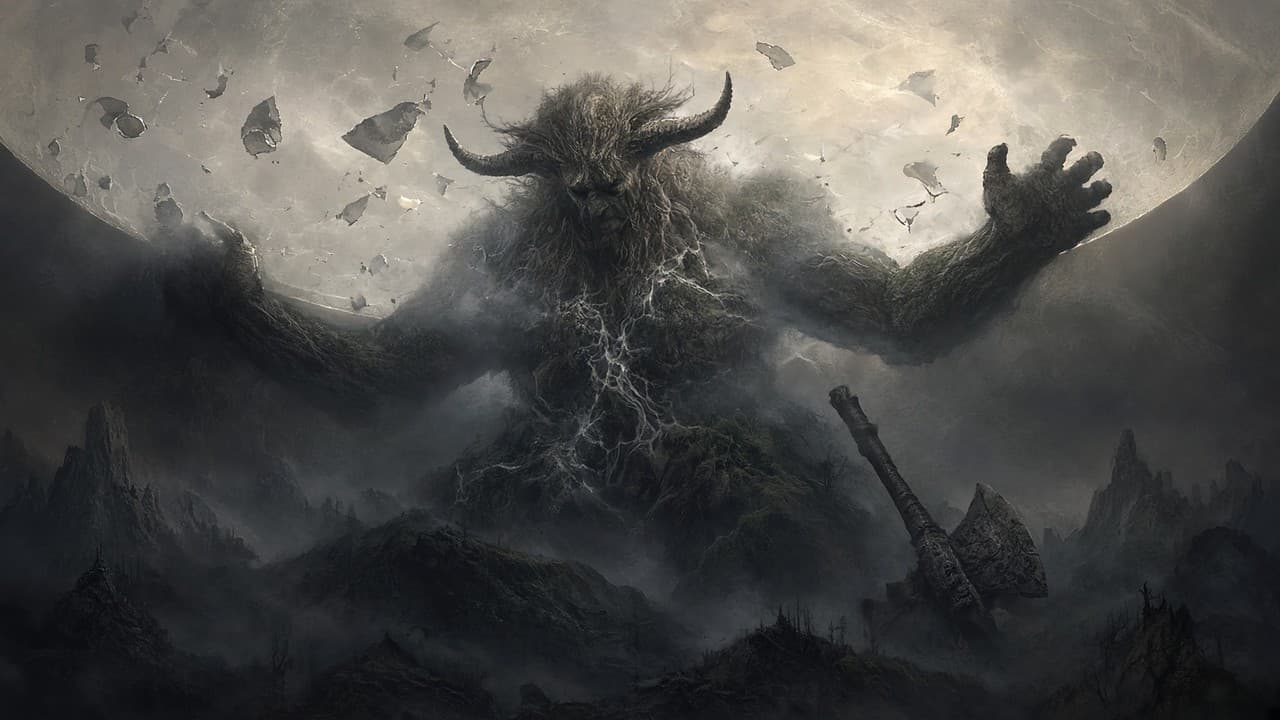 PanguChinese · He was not killed. He held the sky up for eighteen thousand years until it staye...