Giant of the Forest
Also known as: Dodo (Hausa tradition variants), Forest giant
Basic account
West African forest giant of tale cycles: a being of the deep bush.
Account
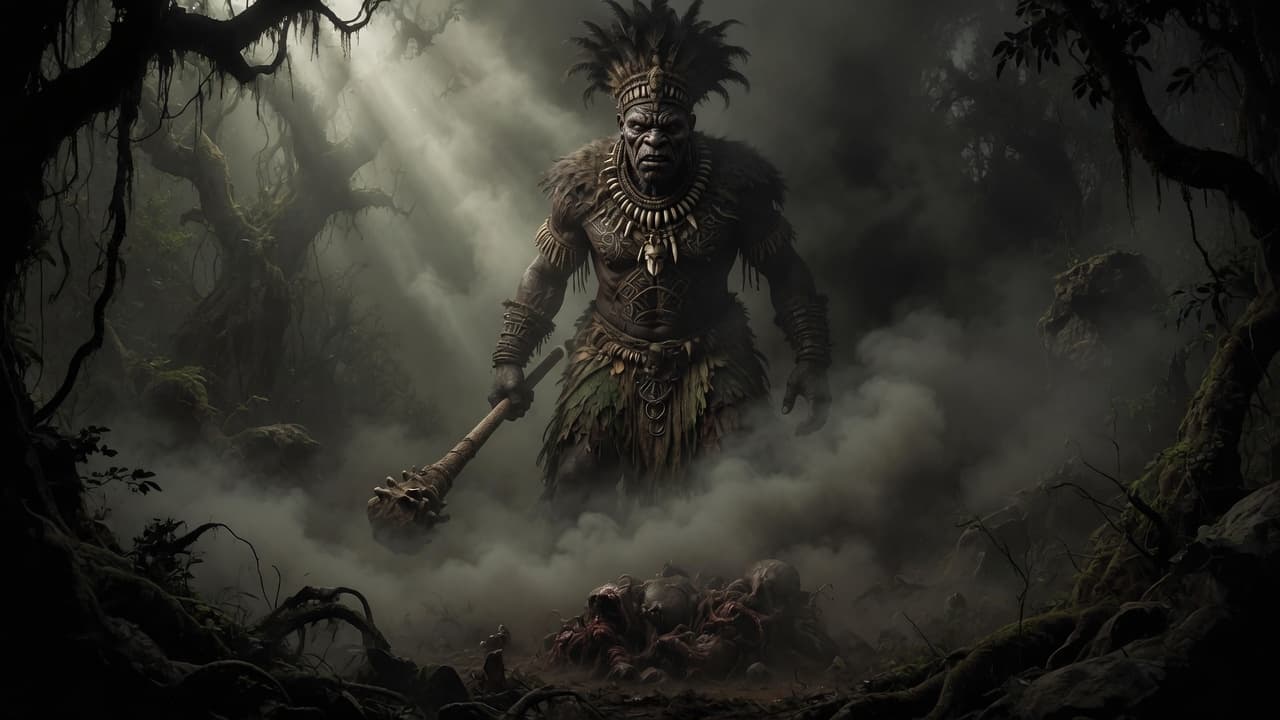
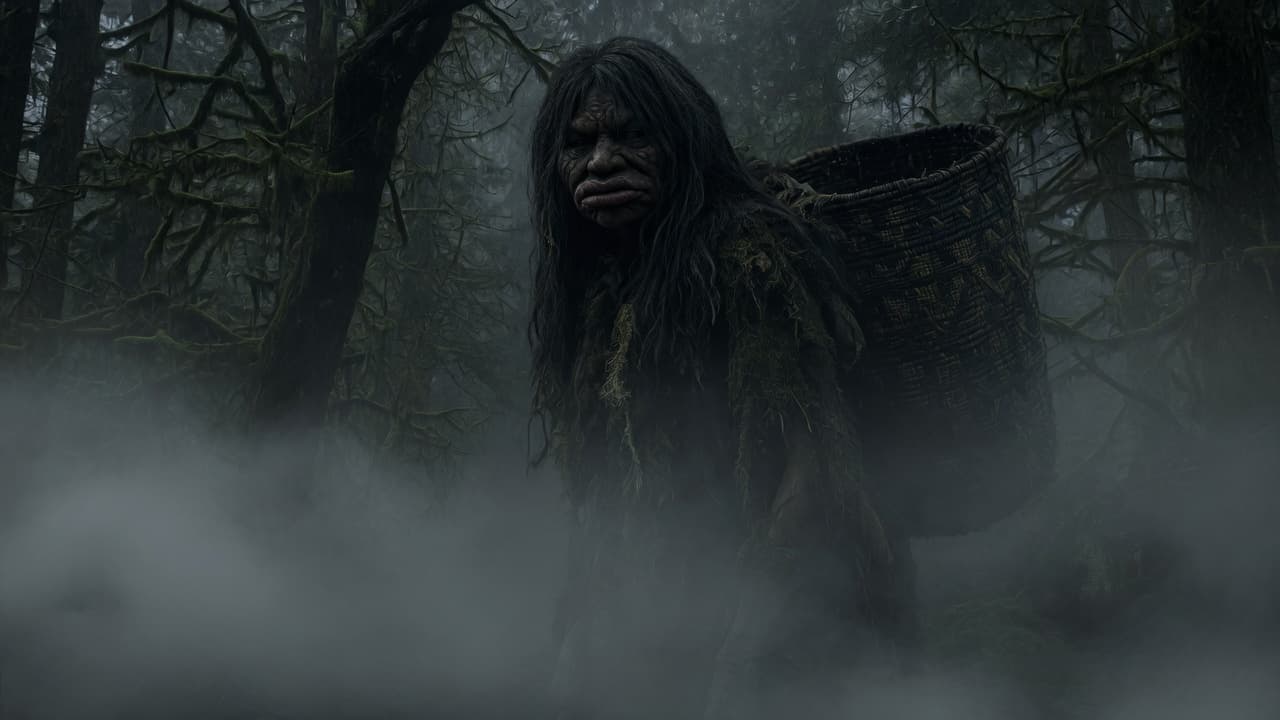
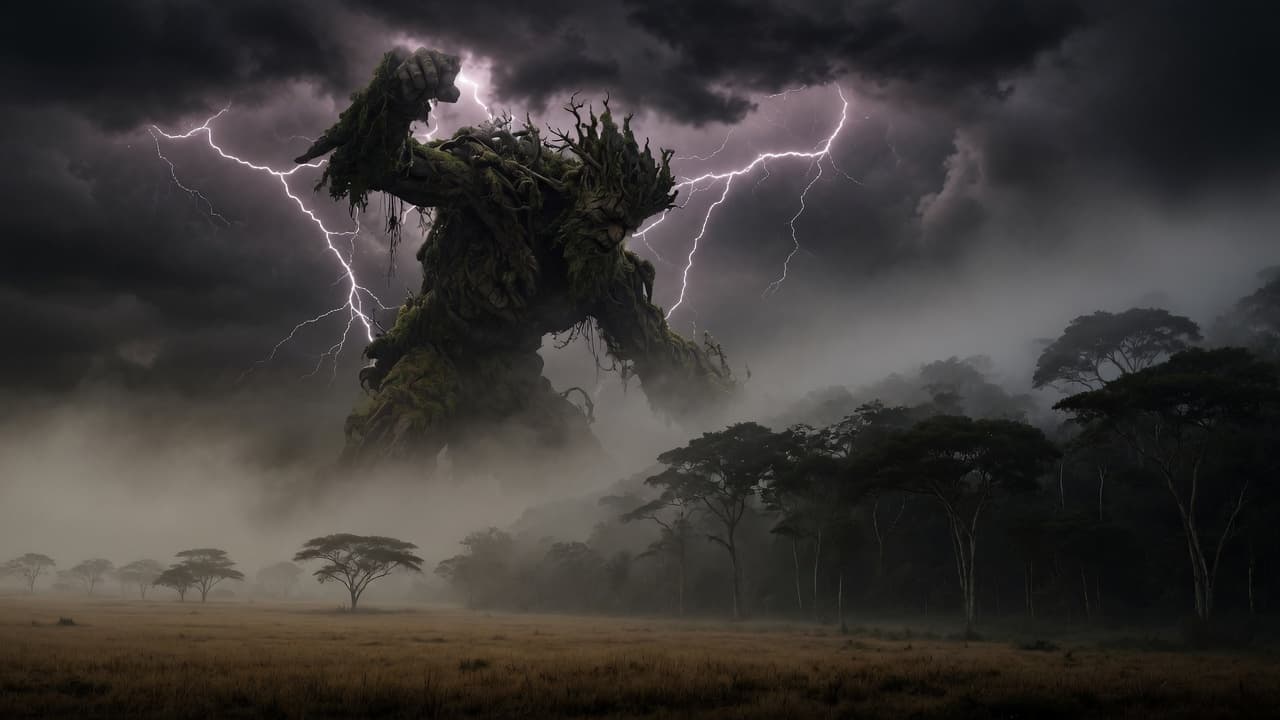
A giant of the forest appears in Hausa storytelling as the large, dangerous inhabitant of the bush beyond the settlement. The specific figure behind this entry is not securely identified.
The story
Hausa oral tradition, across northern Nigeria and Niger, includes a substantial body of tatsuniyoyi: folk tales, generally told in the evening, often to children, frequently featuring a trickster, an ogre or a spirit of the bush.
The bush, daji, is a meaningful category. It is what lies beyond the cultivated and settled land, and it is where the dodo and other dangerous beings live. Dodo is the term most often rendered in English as ogre or monster: large, devouring, sometimes shape-shifting, defeated in the tales by cunning, by a clever child, or by a magical helper.
Whether the entry in this codex refers to a specific named figure or is a generic label applied to that category by an English-language source is not something we can establish. The name as we have it is descriptive rather than a transliteration, which is itself a warning sign: it suggests the figure reached the catalogue through paraphrase rather than from a Hausa source.
We are therefore keeping this short and saying what we can.
Hausa is spoken by tens of millions of people and has a large and living oral and written literature, including a substantial body of published tatsuniyoyi in Hausa. Anyone interested should go to that literature rather than to a one-line English gloss, and a properly researched version of this entry would start there.
If a Hausa-speaking reader can identify what figure this entry was meant to describe, we would like to hear from you.
Where it comes from
Hausa oral tradition (tatsuniyoyi), northern Nigeria and Niger.
Collections include Frank Edgar's Litafi na Tatsuniyoyi na Hausa (1911-13), a large early compilation in Hausa, later partly translated into English by Neil Skinner as Hausa Tales and Traditions.
Substantial Hausa-language scholarship and publishing exists and is the appropriate primary route.
The specific figure behind this catalogue entry is not identified in the sources available to us.
Motifs
The wild one of the uplands
A hairy, solitary giant of forest or mountain, hostile to herders and travellers: the shape a frontier takes in story.
Also carried by: Chinny-kinik (Australian Aboriginal), Dzunukwa (Kwakwaka'wakw / Northwest Coast), Giant of Kunar (Modern legend), Kee-Wakw (Abenaki / Wabanaki), Maero (Māori / Polynesian), Murkupang (Australian Aboriginal), Nawao (Māori), Ojáncanu (Cantabrian), Olentzero (Basque), Oni (Japanese), Orion (Greek), Rübezahl (German / Silesian / Czech), Shuten Dōji (Japanese), Skrymir (Norse), Stallo (Sámi), Svyatogor (Slavic), Thardid Jimbo (Australian Aboriginal), Tsul 'Kalu (Cherokee)
Eater of people
The giant as appetite: it takes travellers, children or the sick. Frequently a warning attached to a specific dangerous place.
Also carried by: Amazimu (Zulu / Nguni), Chinny-kinik (Australian Aboriginal), Cormoran (Celtic / Cornish), Dzunukwa (Kwakwaka'wakw / Northwest Coast), Kee-Wakw (Abenaki / Wabanaki), Maero (Māori / Polynesian), Murkupang (Australian Aboriginal), Ojáncanu (Cantabrian), Oni (Japanese), Papinijuwari (Australian Aboriginal (Tiwi)), Polyphemus (Greek), Shuten Dōji (Japanese), Si-Te-Cah (Paiute), Stallo (Sámi), Tepegöz (Oghuz Turkic), Thardid Jimbo (Australian Aboriginal)
What is disputed
The identification is the problem. A descriptive English name with no Hausa form attached cannot be traced reliably, and we are not going to guess which being was intended.
The dodo of Hausa tales is a broad category rather than a single character, and its members differ between tellings and regions.
Early collections, including Edgar's, were made under colonial administration; Edgar was a colonial officer, and while his compilation is large and valuable, the circumstances of collection are relevant.
This entry is a placeholder with an honest label. It should be either properly researched from Hausa sources or removed.
Sources
- Hausa oral tradition (tatsuniyoyi), northern Nigeria and Niger
- Frank Edgar, Litafi na Tatsuniyoyi na Hausa (1911-13)
- Neil Skinner, Hausa Tales and Traditions (partial translation of Edgar)
Mark for My Journey
Private marks. They are not a collection score.
Marks stay on this device for this session. Sign in to keep your marks.