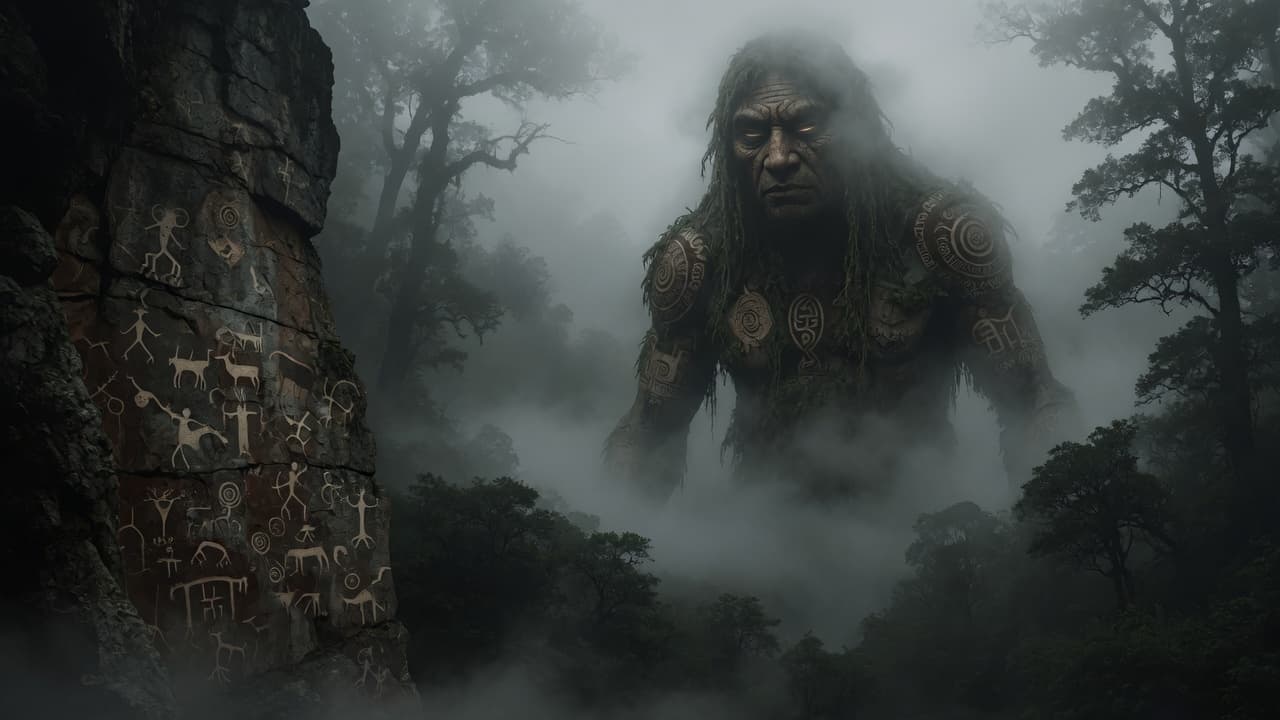
Tsul 'Kalu
Also known as: Judaculla, The Slant-Eyed Giant
Basic account
Cherokee lord of the hunt: slant-eyed giant of the mountains.
Account
Tsul'kalu is the slant-eyed giant of Cherokee tradition, lord of the game animals and master of the hunt. A mountain in North Carolina carries a version of his name, and so does the rock face he is said to have marked.
The story
Tsul'kalu, the name is commonly explained as referring to his slanting or oblique eyes, is a great being of the Cherokee highlands who owns the game. Hunters address themselves to him, because success in hunting is not simply a matter of skill.
The best-known narrative, the Swimmer version as Mooney printed it, concerns his marriage. A woman living with her mother wishes for a husband who is a good hunter. A man arrives at night, brings game, and proves an extraordinary provider, but will not be seen in daylight and refuses to meet her mother. When the mother finally looks, she sees his size and is frightened, and speaks against him. He is offended and leaves, and the woman goes with him, and they are gone into the mountains. Mooney also recorded a second version from John Ax.
He is associated with specific places. Judaculla Rock in Jackson County, North Carolina, is a soapstone boulder covered in petroglyphs, and Cherokee tradition holds that Tsul'kalu left marks on it: Mooney writes of scratches from his leap toward the stream, not a handprint. Judaculla (Mooney's Jutaculla) is an anglicisation of his name. Tanasee Bald is not merely nearby: in Mooney's gazetteer it is his mountain, Tsul'kalu' Tsunegun'yi, and other Balsam locations hold his townhouse and fields.
The petroglyphs are real and pre-modern, but not securely dated. The 2011 National Register nomination gives a period of significance running from the Middle Woodland to roughly AD 1830 and notes Cherokee accounts that production may have continued into the historic period. The rock is a protected site.
He is not a hostile figure in the way most giants in this codex are. He is an owner and a regulator: a being one has a relationship with, and can offend.
Where it comes from
James Mooney's Myths of the Cherokee, published in 1900 by the Bureau of American Ethnology, is the principal published source. Mooney worked with Cherokee informants in North Carolina in the 1880s and 1890s, and his collection remains the largest external compilation.
Cherokee oral tradition, in both the Eastern Band and the Cherokee Nation, is the living source and is not confined to what Mooney recorded.
Judaculla Rock has been surveyed and studied archaeologically, with recording projects continuing; it is managed with Eastern Band involvement.
Place-names throughout the western North Carolina mountains preserve the tradition.
Motifs
The wild one of the uplands
A hairy, solitary giant of forest or mountain, hostile to herders and travellers: the shape a frontier takes in story.
Also carried by: Chinny-kinik (Australian Aboriginal), Dzunukwa (Kwakwaka'wakw / Northwest Coast), Giant of Kunar (Modern legend), Giant of the Forest (Hausa / West African), Kee-Wakw (Abenaki / Wabanaki), Maero (Māori / Polynesian), Murkupang (Australian Aboriginal), Nawao (Māori), Ojáncanu (Cantabrian), Olentzero (Basque), Oni (Japanese), Orion (Greek), Rübezahl (German / Silesian / Czech), Shuten Dōji (Japanese), Skrymir (Norse), Stallo (Sámi), Svyatogor (Slavic), Thardid Jimbo (Australian Aboriginal)
The giant as guardian
Set to watch a place, an island or a people. Menace pointed outward instead of inward.
Also carried by: Briareus (Greek), Dzunukwa (Kwakwaka'wakw / Northwest Coast), Gaoh (Iroquois / Haudenosaunee), Geryon (Greek), Humbaba (Sumerian, Akkadian, later Hurrian and Hittite), Rübezahl (German / Silesian / Czech), Surtr (Norse), Talos (Greek)
What is disputed
Mooney's corpus is foundational and also a nineteenth-century salvage ethnography, filtered through his selection, translation and framing. It is a starting point, not an authority over Cherokee sources.
The petroglyphs on Judaculla Rock have not been securely dated or interpreted. Estimates vary widely and there is no consensus on what the carvings represent; the association with Tsul'kalu is traditional attribution rather than an archaeological finding.
The etymology of the name and its relation to the anglicised Judaculla is discussed differently in different sources.
As with other entries here, this is described from outside a living tradition, and Cherokee accounts should take precedence over this one.
Sources
- James Mooney, Myths of the Cherokee, BAE 19th Annual Report (1900)
- Cherokee oral tradition (Eastern Band; Cherokee Nation)
- Judaculla Rock petroglyph site, Jackson County, North Carolina
Scholarly notes
Sources and scholarly notes come with the same membership.
Chain of custody
Tsul'kalu, the slant-eyed giant who owns the game animals, is a genuine figure of old Cherokee tradition, remembered in the mountains of western North Carolina and marked on the stone now called Judaculla Rock.
The tradition is documented in nineteenth-century print and rests mainly on a turn-of-the-century ethnographic report whose Cherokee narrators are named, while the carved rock associated with him is much older than that writing and is linked to him by tradition rather than by anything in the stone.
Mark for My Journey
Private marks. They are not a collection score.
Marks stay on this device for this session. Sign in to keep your marks.
Related giants
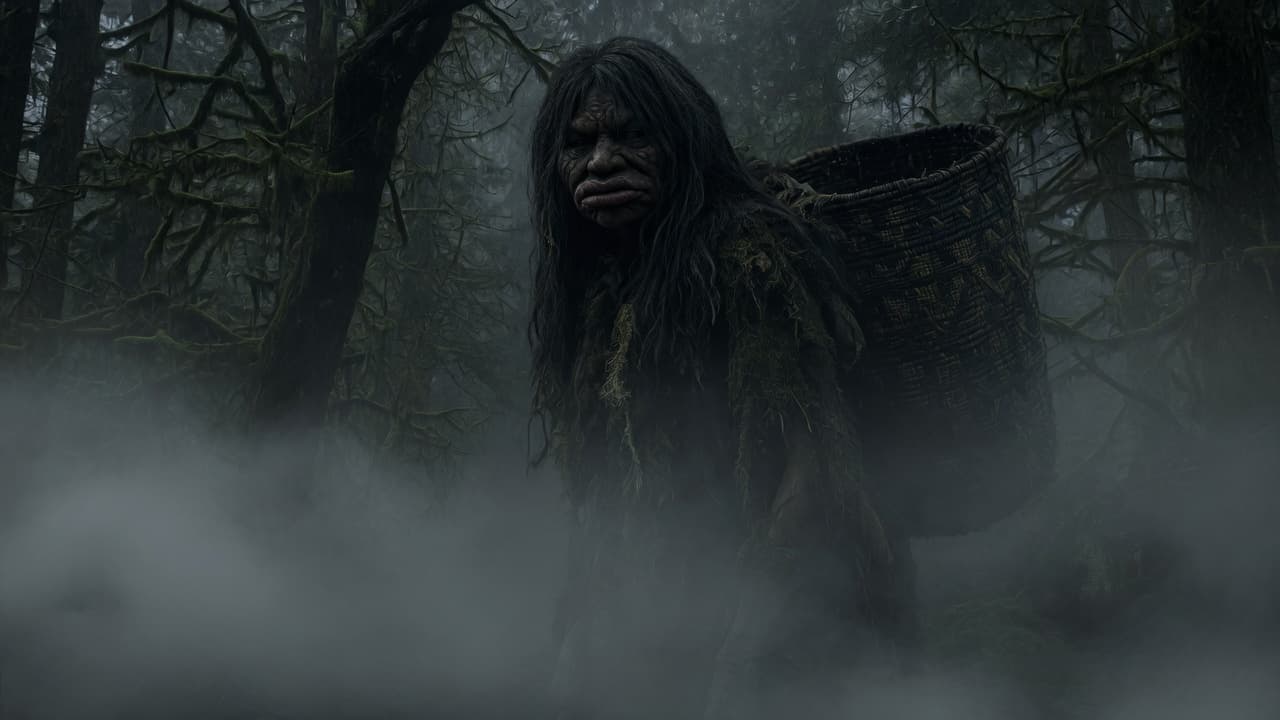 DzunukwaKwakwaka'wakw / Northwest Coast · Giantess of the woods who steals children and owns treasures of copper and power...
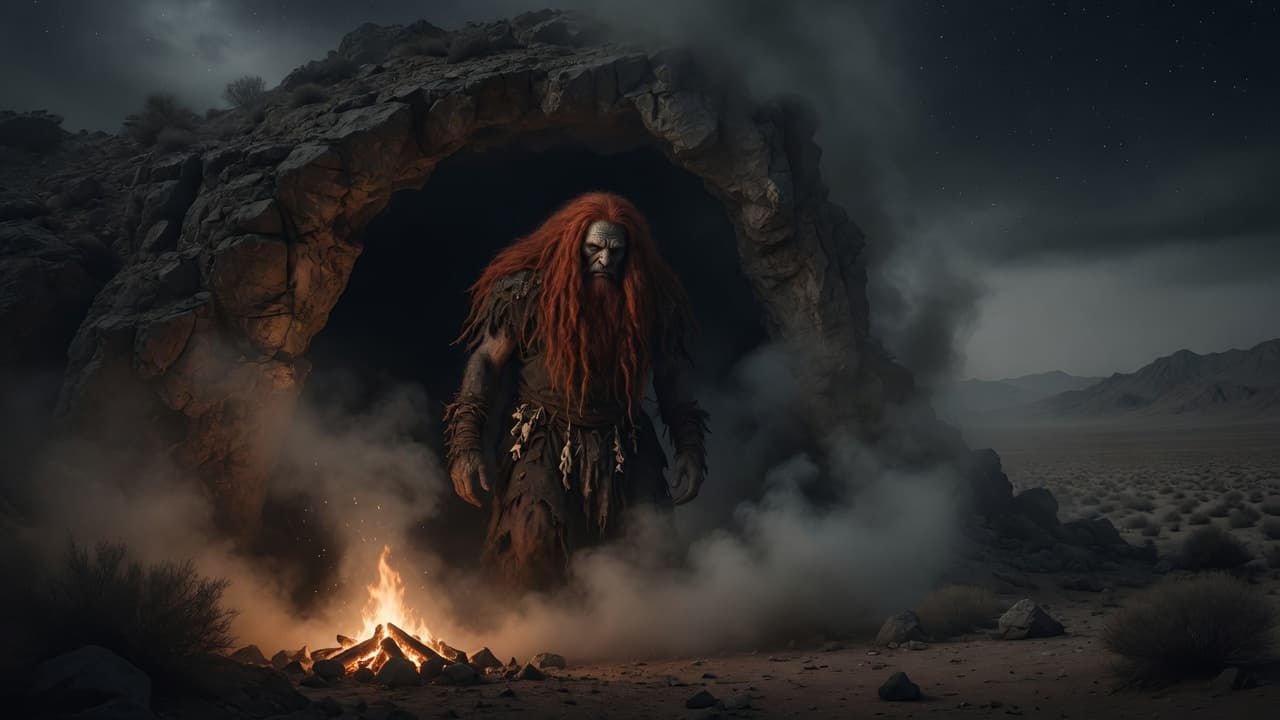 Si-Te-CahPaiute · A Northern Paiute tradition about a people-eating tribe, and how it became a sto...
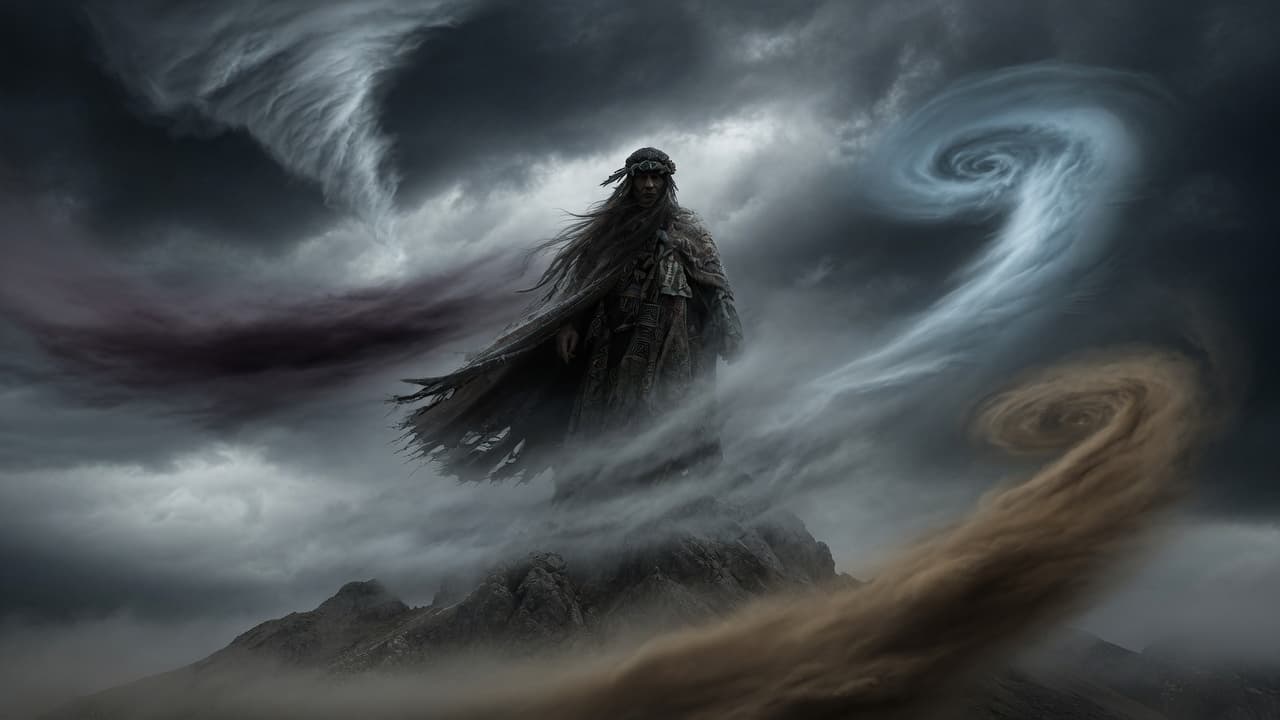 GaohIroquois / Haudenosaunee · Master of the winds: a giant spirit who pens the gales.