Oni
Also known as: Japanese ogres
Basic account
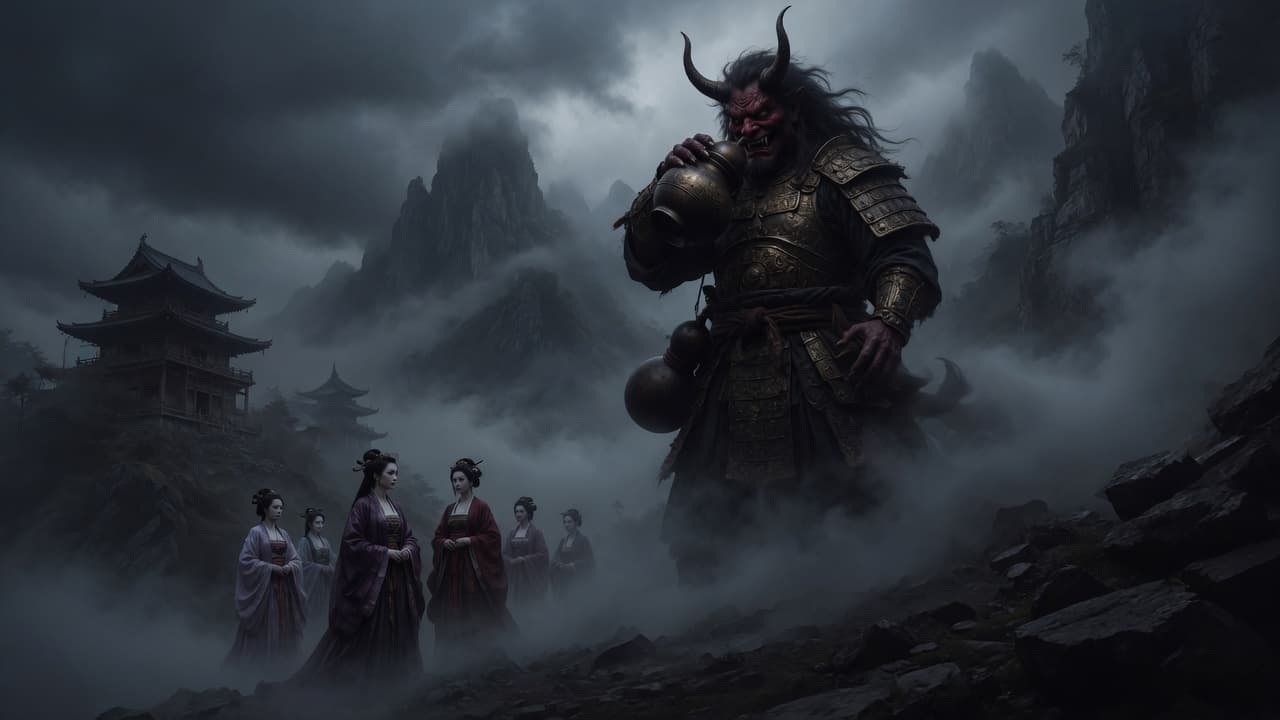
Horned ogres of Japanese folklore: punishers, marauders, festival demons.
Account
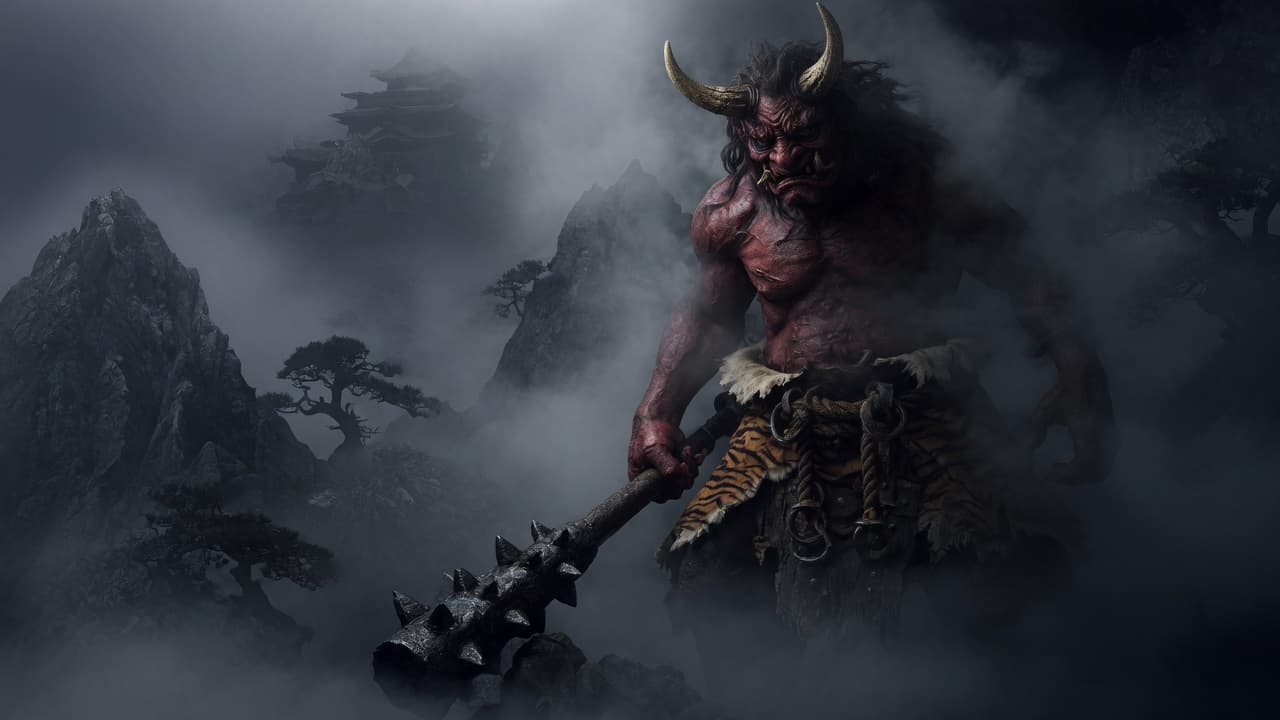
are horned, brightly coloured ogres with iron clubs, and they are everywhere in Japanese culture: in medieval tales, in temple ritual, on roof tiles, and in a bean-throwing ceremony held in households every February.
The story
The is not one figure but a category, and it has changed considerably over time.
The earliest sense of the word points to something invisible and harmful: a concealed spirit causing sickness or misfortune, closer to a malign presence than a body. The now-standard image assembled gradually: great size, red or blue or green skin, one or more horns, wild hair, a tiger-skin loincloth, and the kanabo, a studded iron club. The phrase ni kanabo, "an with an iron club", still means overwhelming and unnecessary advantage.
Buddhist cosmology supplied much of the visual grammar. serve as the tormentors of hell, and their horned, muscular forms in temple painting fed back into the general image. Their traditional direction is the northeast, the kimon or demon gate, which is why buildings were designed with that corner guarded. Enryaku-ji, on Mount Hiei northeast of Kyoto, came to be understood as guarding that quarter, but the chronology runs the other way: Saicho founded the temple in 788 (named Enryaku-ji in 823), and Heian-kyō was established in 794. The demon-gate role was assigned to an existing foundation, not a reason for siting it.
They eat people. Medieval collections are direct about this, and in those tales take travellers, women and children with no negotiation available.
They are also thoroughly domesticated in practice. At Setsubun, on the eve of spring, households throw roasted soybeans while shouting wa soto, fuku wa uchi: demons out, fortune in. Someone, often a father in a mask, plays the and is driven from the house. A being that eats people in the tales is annually chased out of the living room by children with beans.
Onigawara, -faced roof tiles, guard buildings by presenting a face frightening enough to deter other spirits.
Where it comes from
Early references appear in Heian-period sources. The Konjaku Monogatarishu, a large collection of tales compiled in the late Heian period, contains many narratives and is a principal source for the medieval conception.
Otogizoshi, short illustrated tales of the Muromachi period, develop the familiar adventuring narratives.
Buddhist hell-scroll painting from the Kamakura period onward established much of the iconography.
Setsubun bean-throwing is documented from the Muromachi period and is connected to earlier continental exorcism practice. Noh and kyogen have roles, and the tradition continues in contemporary manga, film and games essentially unbroken.
Motifs
Eater of people
The giant as appetite: it takes travellers, children or the sick. Frequently a warning attached to a specific dangerous place.
Also carried by: Amazimu (Zulu / Nguni), Chinny-kinik (Australian Aboriginal), Cormoran (Celtic / Cornish), Dzunukwa (Kwakwaka'wakw / Northwest Coast), Giant of the Forest (Hausa / West African), Kee-Wakw (Abenaki / Wabanaki), Maero (Māori / Polynesian), Murkupang (Australian Aboriginal), Ojáncanu (Cantabrian), Papinijuwari (Australian Aboriginal (Tiwi)), Polyphemus (Greek), Si-Te-Cah (Paiute), Stallo (Sámi), Tepegöz (Oghuz Turkic), Thardid Jimbo (Australian Aboriginal), Shuten Dōji (Japanese)
The wild one of the uplands
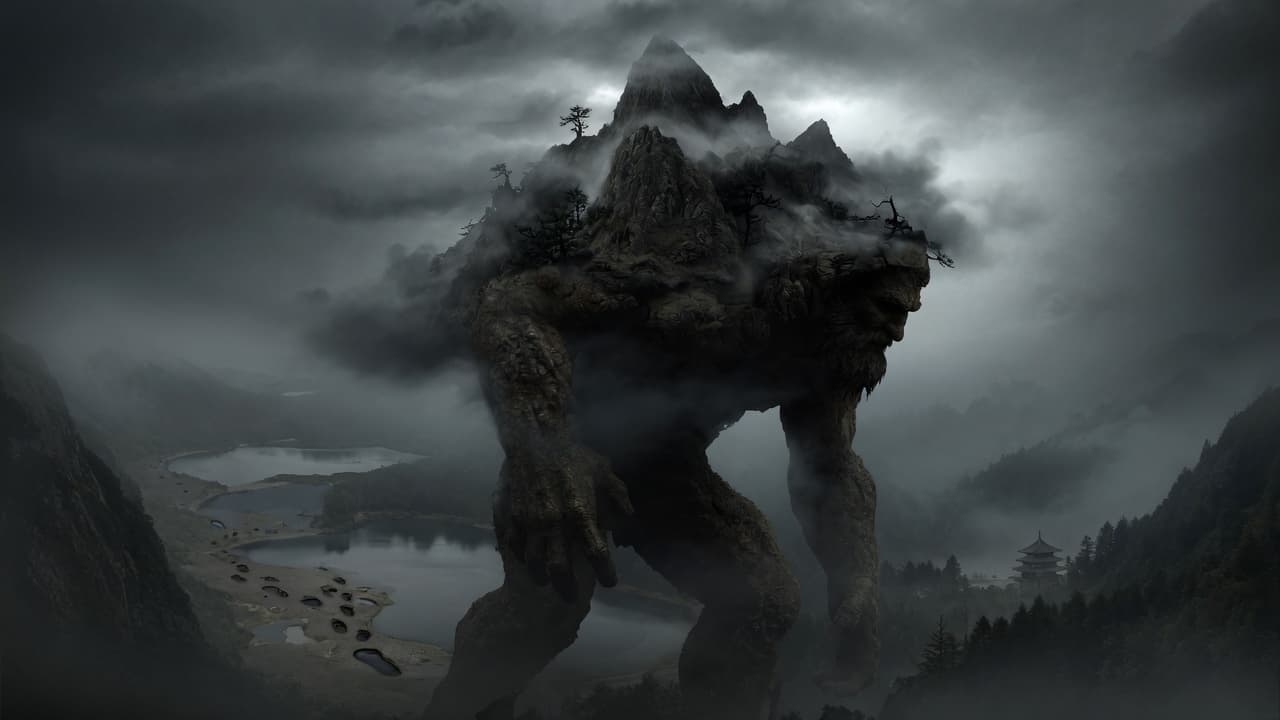
A hairy, solitary giant of forest or mountain, hostile to herders and travellers: the shape a frontier takes in story.
Also carried by: Chinny-kinik (Australian Aboriginal), Dzunukwa (Kwakwaka'wakw / Northwest Coast), Giant of Kunar (Modern legend), Giant of the Forest (Hausa / West African), Kee-Wakw (Abenaki / Wabanaki), Maero (Māori / Polynesian), Murkupang (Australian Aboriginal), Nawao (Māori), Ojáncanu (Cantabrian), Olentzero (Basque), Orion (Greek), Rübezahl (German / Silesian / Czech), Skrymir (Norse), Stallo (Sámi), Svyatogor (Slavic), Thardid Jimbo (Australian Aboriginal), Tsul 'Kalu (Cherokee), Shuten Dōji (Japanese)
Comes with the season
A giant tied to a date in the calendar (midwinter, harvest, a feast) who arrives, is fed or feared, and leaves.
What is disputed
The etymology is uncertain. A derivation from on, a word for something hidden or concealed, is commonly proposed and would fit the earliest invisible sense, but is not secure.
How much of the standard image is native and how much came with Buddhism from China and India is difficult to separate. Horns, clubs and hell-torturer roles all have continental parallels, and the syncretism is old enough to be untangleable.
Whether historically real people fed the tradition has been argued (outsiders, mountain communities, foreigners with unfamiliar features, or bandit groups), but these suggestions are largely modern speculation.
Because is a category rather than a character, generalising about them is inherently unsafe; a Heian sickness-spirit and a Muromachi mountain ogre share a word more than a nature.
Sources
- Konjaku Monogatarishu (late Heian period tale collection)
- Otogizoshi illustrated tales (Muromachi period)
- Kamakura-period Buddhist hell scrolls (iconographic source)
- Setsubun observance, documented from the Muromachi period
Scholarly notes
Sources and scholarly notes come with the same membership.
Mark for My Journey
Private marks. They are not a collection score.
Marks stay on this device for this session. Sign in to keep your marks.