Si-Te-Cah
Also known as: Sai'i
Basic account
A Northern Paiute tradition about a people-eating tribe, and how it became a story about giants.
Account
Sarah Winnemucca Hopkins published the story in 1883. In her telling there are no giants.
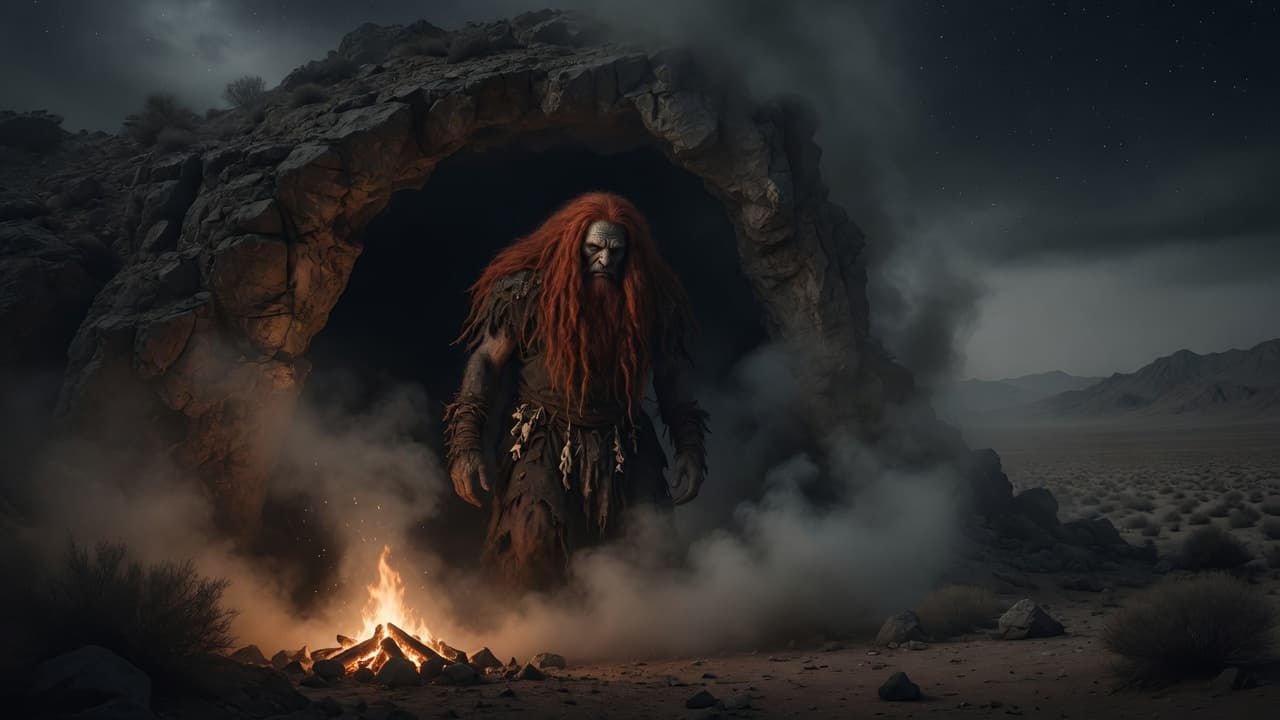
She does record reddish hair: her people say the tribe they exterminated had it, and she says she has some of that hair, handed down from father to son.
The story
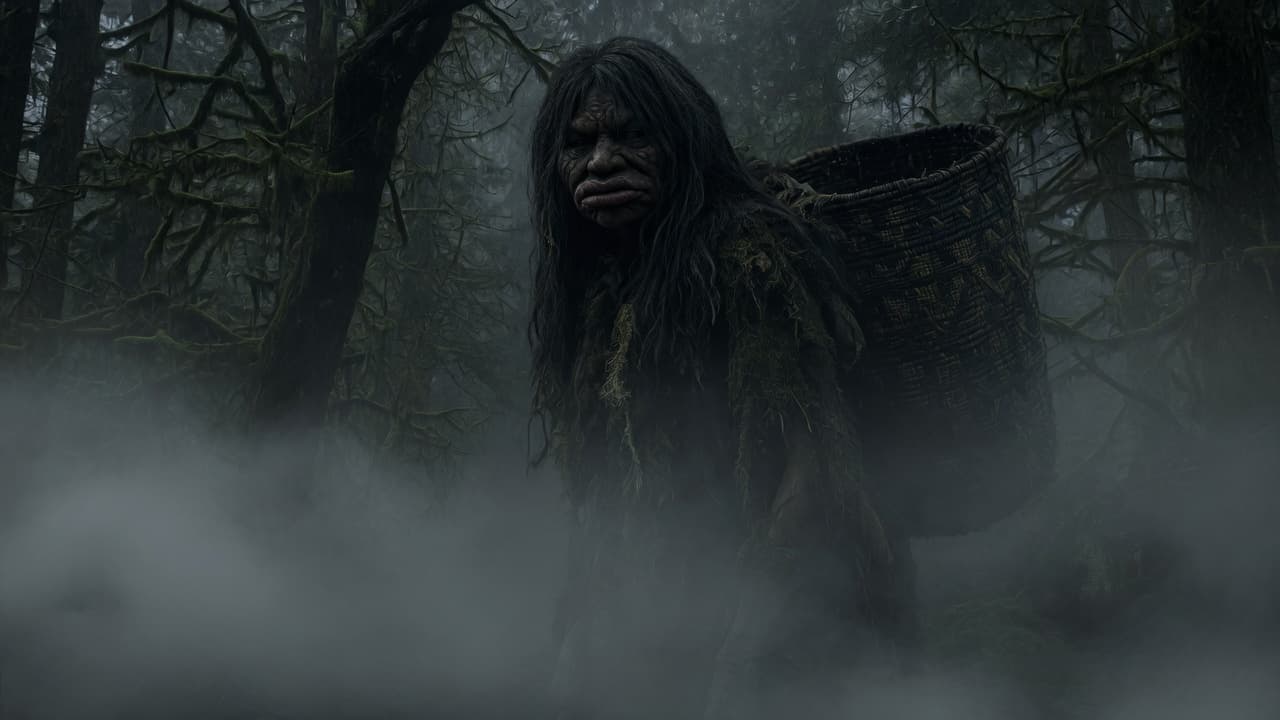
What she describes, in Life Among the Piutes, is a small tribe of barbarians who used to live along the Humboldt River, many hundred years ago. They waylaid her people and ate them. They dug holes in the trails at night so that anyone travelling in the dark would fall in. They dug up the Paiute dead and carried them off, and they ate their own dead too. And they were brave: her people said that in a fight they would jump into the air after the arrows that passed over their heads and shoot the same arrows back.
The word small is hers. The word giant is not. It appears once in the whole book, in a passage where she explains that stories of giants are the ones her people file under “it is only coyote”, which means make-believe.
The war ended at a cave above the Humboldt. Her people filled the mouth with wood, and the trapped tribe pulled the wood inside, and it was set alight. Twice they called in and offered to put the fire out if the tribe would agree to stop eating people. No answer came either time. Ten days later some went back, and knew from the smell.
Then the sentence most retellings drop. “This tribe was called people-eaters, and after my people had killed them all, the people round us called us Say-do-carah. It means conqueror; it also means enemy.”
Say-do-carah is what the Paiutes were called afterwards in Winnemucca's sentence. Omer Stewart, in The Northern Paiute Bands (1939), read Say-do-carah as one of a cluster of names for the destroyed Humboldt Sink group, alongside forms such as Campbell's Sidocaw; the point is contested rather than settled.
Where it comes from
Lovelock Cave itself is real and it matters. In 1911 two miners, James Hart and David Pugh, filed a mineral claim and dug out bat guano to sell as fertiliser, through nearly two metres of deposit, discarding what was in their way.
Llewellyn Loud came in 1912 to salvage what was left and recovered around ten thousand objects. He returned in 1924 with Mark Raymond Harrington, and they published in 1929.
It is one of the most important sites in the Great Basin, and the reason it is famous has nothing to do with why it is important.
Motifs
Eater of people
The giant as appetite: it takes travellers, children or the sick. Frequently a warning attached to a specific dangerous place.
Also carried by: Amazimu (Zulu / Nguni), Chinny-kinik (Australian Aboriginal), Cormoran (Celtic / Cornish), Dzunukwa (Kwakwaka'wakw / Northwest Coast), Giant of the Forest (Hausa / West African), Kee-Wakw (Abenaki / Wabanaki), Maero (Māori / Polynesian), Murkupang (Australian Aboriginal), Ojáncanu (Cantabrian), Oni (Japanese), Papinijuwari (Australian Aboriginal (Tiwi)), Polyphemus (Greek), Shuten Dōji (Japanese), Stallo (Sámi), Tepegöz (Oghuz Turkic), Thardid Jimbo (Australian Aboriginal)
The people who came before
Giants as an earlier race displaced by the present one. Often a way of accounting for ruins, large bones, or an older population.
Also carried by: Bestla (Norse), British Giants: The Lesser Traditions (British and Welsh), Croatian Giants: The Lesser Traditions (Croatian), Fangfeng (Chinese), Fomorians (Irish), Gogmagog (Celtic / British), Ispolini (Bulgarian), Jentilak (Basque), Kahui-Tipua (Māori), Kalev and Kalevipoeg (Estonian, Finnish, Karelian), Katallani (Albanian), Koljo (Finnish), Milžinai (Lithuanian), Mouros (Galician, Asturian, Portuguese), Nawao (Māori), Nemri (Croatian), Nephilim (Biblical / Near Eastern), Og of Bashan (Biblical / Near Eastern), Quinametzin (Mesoamerican / Aztec), Surid ibn Salhouk (Coptic and Islamic Egypt, medieval), The Giants of Santa Elena (Manta, recorded by Spanish chroniclers), The Giants of the Canaries (European accounts of the Guanches), The Gigantes (Greek), The Patagonian Giants (European accounts of the Tehuelche and Selk'nam), Tombe dei Giganti (Sardinian), Uriași (Romanian), Ymir (Norse), ʿĀd, Iram and Thamud (Arabian and Islamic), ʿUj ibn ʿAnāq (Islamic tradition, Arabic and Persian)
Bones offered as evidence
Large remains, real fossils, misread burials, or claims that no one can now examine, put forward to prove the giants were literal.
Also carried by: Fangfeng (Chinese), Giant of Kandahar (Modern legend), Mapinguari (Amazonian, Brazilian), Nephilim (Biblical / Near Eastern), Og of Bashan (Biblical / Near Eastern), Quinametzin (Mesoamerican / Aztec), The Giants of Santa Elena (Manta, recorded by Spanish chroniclers), The Giants of the Canaries (European accounts of the Guanches), ʿĀd, Iram and Thamud (Arabian and Islamic)
What is disputed
The red hair is in Winnemucca, not imported later. In the same chapter of Life Among the Piutes she writes that her people say the tribe they exterminated had reddish hair, and that she has some of that hair. What later retellings add is giant stature. Adrienne Mayor notes that hair pigment can also turn a rusty red after death under the right conditions, which is a separate path for the same detail in excavated remains. The giants still have no foothold in the 1883 text.
This entry sits in Bones and Shadows because the claim exists and people come looking for it. Not because giant stature survived contact with its own source.
Sources
- Sarah Winnemucca Hopkins, Life Among the Piutes (1883)
- L.L. Loud and M.R. Harrington, Lovelock Cave, UC Publications in American Archaeology and Ethnology (1929)
- Subsequent Great Basin archaeological literature
- Adrienne Mayor, Fossil Legends of the First Americans (2005)
Scholarly notes
Sources and scholarly notes come with the same membership.
Chain of custody
Excavations at Lovelock Cave in Nevada recovered the skeletons and mummies of a race of red-haired giants, the Si-Te-Cah of Paiute tradition, some of them eight to ten feet tall.
Red hair is attested in the record from the beginning, in Paiute tradition and in one eyewitness statement about a mummy; the giant heights enter later, through measurements taken outside the cave and through remains that were dispersed before anyone studied them.
Mark for My Journey
Private marks. They are not a collection score.
Marks stay on this device for this session. Sign in to keep your marks.
Frequently asked
- Who were the Si-Te-Cah?
- In Sarah Winnemucca Hopkins’s Life Among the Piutes (1883), the people she describes are a small tribe of barbarians who used to live along the Humboldt River, many hundred years ago: they waylaid her people and ate them. She calls them people-eaters. In her telling there are no giants.
- Were the Si-Te-Cah giants?
- In Winnemucca’s telling there are no giants. The word small is hers. The word giant is not. It appears once in the whole book, where she explains that stories of giants are filed under “it is only coyote,” meaning make-believe. What later retellings add is giant stature. The giants still have no foothold in the 1883 text. The claim is circulating oral tradition, not confirmed fact.
- What was found at Lovelock Cave?
- Lovelock Cave itself is real. In 1911 two miners dug out bat guano, discarding what was in their way. Llewellyn Loud came in 1912 and recovered around ten thousand objects; he returned in 1924 with Mark Raymond Harrington, and they published in 1929. It is one of the most important sites in the Great Basin, and the reason it is famous has nothing to do with why it is important.
- Did excavations recover giant skeletons?
- The circulating claim is that excavations recovered skeletons and mummies of red-haired giants, some of them eight to ten feet tall. Red hair is attested from the beginning; the giant heights enter later, through measurements taken outside the cave and through remains that were dispersed before anyone studied them. No official records corroborate the giant account.
- What about the red hair?
- The red hair is in Winnemucca, not imported later. She writes that her people say the tribe they exterminated had reddish hair, and that she has some of that hair. Adrienne Mayor notes that hair pigment can also turn a rusty red after death under the right conditions, which is a separate path for the same detail in excavated remains.